Nomad Internet: The Complete Guide to Reliable Internet for Rural Areas, RV Travelers, and Digital Nomads

Introduction
Nomad Internet, In today’s connected world, having reliable internet is no longer a luxury—it’s a necessity. Whether you’re working remotely, attending online classes, streaming your favorite shows, or staying connected with family and friends, a dependable internet connection makes everyday life much easier. Unfortunately, not everyone has access to fast and stable broadband, especially those living in rural communities or constantly traveling.
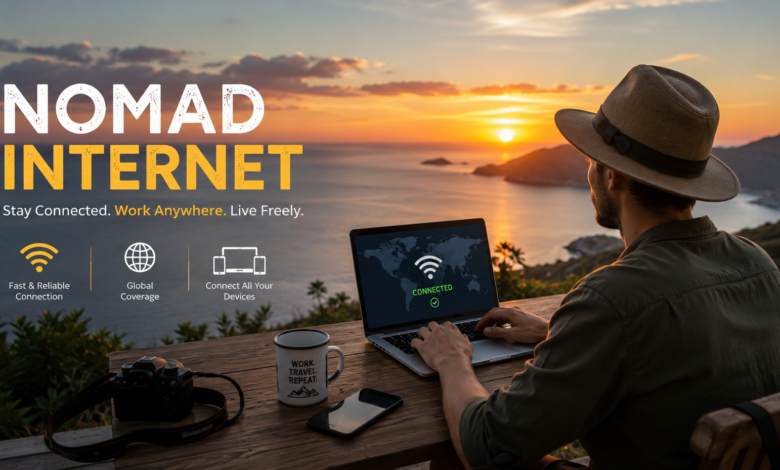
This is where Nomad Internet has gained attention. Designed to provide internet access in places where traditional providers often fall short, Nomad Internet offers an alternative solution for people who need flexibility without relying on wired infrastructure. From remote workers and RV travelers to homeowners in underserved regions, many users consider it a practical option when cable or fiber simply isn’t available.
If you’ve been searching for a better internet solution, this guide will walk you through everything you need to know about Nomad Internet. We’ll explore how it works, who it’s best suited for, its benefits and limitations, and what to consider before signing up.
What Is Nomad Internet?
Nomad Internet is a wireless internet service that focuses on delivering connectivity to customers who may not have access to traditional broadband providers. Instead of depending on cable or fiber lines, it uses cellular network technology to provide internet service through compatible wireless equipment.
One of the reasons people choose Nomad Internet is its flexibility. Installation is generally much simpler than conventional home internet because there is no need for extensive wiring or underground infrastructure. In many cases, users simply receive a router, activate the service, and begin using the internet.
The service has become particularly attractive for people living in rural locations where internet choices are limited. It is also popular among RV owners, campers, digital nomads, and travelers who want to maintain internet access while moving from one location to another.
How Does Nomad Internet Work?
Unlike traditional internet providers that rely on physical cables, Nomad Internet works by connecting to nearby cellular towers. The router receives wireless signals from the network and converts them into a Wi-Fi connection that multiple devices can use simultaneously.
The exact speeds you experience depend on several factors. Signal strength, network congestion, your location, weather conditions, and the distance from nearby towers all play a role in determining overall performance. As a result, users in different areas may have very different experiences.
Modern routers used with Nomad Internet often support multiple connected devices, making them suitable for families, remote workers, or small teams. Smartphones, laptops, tablets, gaming consoles, smart TVs, and security cameras can all connect through the same wireless network.
Who Should Consider Nomad Internet?
Nomad Internet isn’t necessarily designed for everyone, but it fills an important gap for many users. People living in rural communities often struggle with slow DSL connections or limited provider options. For them, wireless internet can provide a noticeable improvement.
Digital nomads and remote workers also appreciate the flexibility. Since work is no longer tied to a traditional office, many professionals travel while maintaining full-time careers. Reliable internet allows them to join video meetings, upload files, collaborate with teammates, and manage projects from almost anywhere.
RV travelers are another major audience. Whether exploring national parks, camping across the country, or living full-time on the road, maintaining internet connectivity makes navigation, communication, entertainment, and work significantly easier.
Benefits of Choosing Nomad Internet
One of the biggest advantages is accessibility. Many rural residents simply cannot get fiber or cable internet because providers haven’t expanded infrastructure into their communities. Nomad Internet offers an alternative where traditional services are unavailable.
Another benefit is convenience. Since the service doesn’t require extensive installation, getting connected is usually much faster than waiting weeks for wired infrastructure. This makes it especially attractive for temporary housing, vacation properties, and mobile lifestyles.
Flexibility is another major selling point. Users aren’t tied to a single permanent location in the same way traditional wired internet customers are. This mobility has made Nomad Internet increasingly popular among people whose lifestyle involves frequent travel.
Potential Drawbacks to Keep in Mind
Although Nomad Internet offers many benefits, it’s important to understand its limitations. Because it depends on cellular networks, internet speeds can fluctuate throughout the day. During peak usage hours, performance may slow if many users are connected to the same tower.
Coverage also varies by location. Some rural areas enjoy excellent cellular reception, while others experience weaker signals. Before choosing any wireless internet provider, it’s wise to research network availability where you plan to use the service most often.
Pricing may also differ from traditional internet providers depending on the plan you choose. While the flexibility is valuable, users should compare monthly costs, equipment fees, and service features before making a final decision.
Tips for Getting the Best Performance
Router placement can significantly impact your connection quality. Positioning the router near a window or elevated area often improves signal reception by reducing physical obstructions between the device and nearby cellular towers.
Limiting unnecessary background downloads can also help maintain better speeds. Automatic software updates, cloud backups, and multiple streaming devices running simultaneously may consume significant bandwidth and affect overall performance.
Keeping your equipment updated is equally important. Manufacturers regularly release firmware updates that improve security, stability, and compatibility. Checking for updates ensures your router performs as efficiently as possible.
How Does Nomad Internet Compare to Traditional Broadband?
Traditional broadband services such as fiber and cable generally deliver faster and more consistent speeds because they rely on dedicated physical infrastructure. For users living in cities with access to these services, wired internet often remains the preferred option.
However, the situation changes dramatically in underserved areas. Many rural communities have limited infrastructure, making wireless internet a practical alternative. In these cases, Nomad Internet can provide significantly better performance than outdated DSL connections or unreliable satellite options.
Another important difference is mobility. Fiber and cable connections remain fixed to a specific address, while wireless internet offers greater flexibility for people who frequently relocate or travel.
Is Nomad Internet Worth It?
The answer depends largely on your location and internet needs. If you already have access to affordable fiber internet with excellent speeds, switching may not provide substantial advantages. Wired broadband remains the gold standard for consistent performance.
On the other hand, if you’re living in a rural community, traveling frequently, or working remotely from different locations, Nomad Internet could be a practical solution. Its wireless approach helps bridge connectivity gaps where traditional providers cannot.
Before subscribing, compare available plans, evaluate coverage in your area, estimate your monthly data usage, and consider the number of devices you’ll connect. Taking these factors into account will help you determine whether the service matches your lifestyle.
Final Thoughts
Finding dependable internet can be challenging when traditional broadband isn’t available, but wireless alternatives have expanded opportunities for millions of users. Nomad Internet represents one of those options, offering flexible connectivity for rural households, travelers, RV owners, and remote professionals who need reliable online access without depending on fixed infrastructure.
Like any internet service, the overall experience depends on location, network conditions, and individual usage patterns. Understanding both the advantages and potential limitations allows you to make a more informed decision before investing in a plan.
As remote work, online education, and digital lifestyles continue to grow, flexible wireless internet solutions will remain increasingly valuable. If reliable connectivity is a priority and conventional broadband isn’t an option, Nomad Internet is certainly worth considering as part of your search for dependable internet access.
You May Also Read: Gimkit Dashboard