Introduction
Language shapes the way we understand people, experiences, and identities. Over the past several years, the term synonyms of neurodivergent has become a popular search because many people want to find alternative words that describe neurological differences accurately and respectfully. Whether you’re writing an article, creating educational content, or simply trying to communicate more clearly, understanding the best terminology is essential.
Although many people search for synonyms of neurodivergent, it’s important to know that there isn’t one perfect replacement. Neurodivergent is a broad umbrella term that describes people whose brains function differently from what society considers “typical.” These differences may include autism, ADHD, dyslexia, dyspraxia, Tourette syndrome, and several other neurological conditions.
This guide explores the most common synonyms of neurodivergent, explains when they should be used, and highlights terms that should be avoided. By the end, you’ll have a better understanding of respectful, modern language and why choosing the right words matters.
What Does Neurodivergent Mean?
The word neurodivergent refers to individuals whose neurological development or functioning differs from the majority of the population. Rather than viewing these differences as problems that need to be fixed, the concept recognizes that brains naturally develop in different ways.
The idea comes from the broader concept of neurodiversity, which suggests that neurological differences are a normal part of human variation. Instead of labeling someone as abnormal, neurodiversity encourages society to recognize different ways of thinking, learning, communicating, and solving problems.
When people search for synonyms of neurodivergent, they often expect a simple list of replacement words. However, many alternatives carry different meanings, so understanding the context behind each one is just as important as knowing the words themselves.
Why People Search for Synonyms of Neurodivergent
Writers, students, teachers, employers, and healthcare professionals often look for synonyms of neurodivergent because they want to avoid repeating the same phrase throughout their writing. Variety improves readability and helps keep content engaging.
Another reason is curiosity. Many people hear the word neurodivergent for the first time and wonder whether there are easier or more familiar alternatives. Since language around neurological differences continues to evolve, people naturally seek updated terminology.
Some users are also trying to ensure their language is respectful and inclusive. They want to communicate accurately without unintentionally using outdated or offensive terms. Understanding appropriate alternatives helps promote more thoughtful conversations.
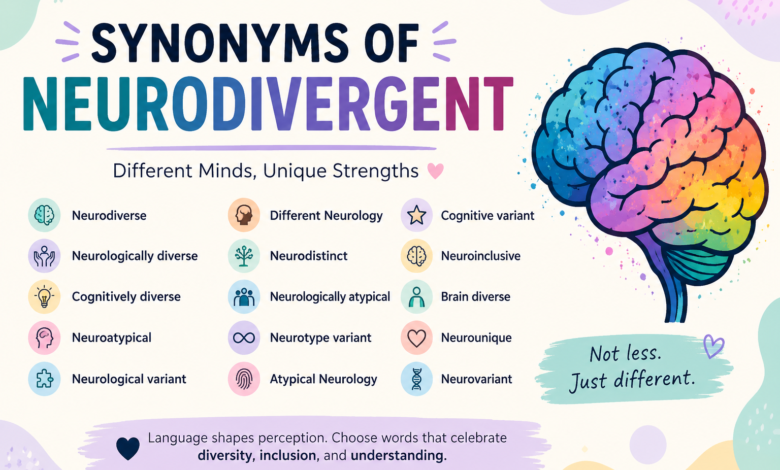
Common Synonyms of Neurodivergent
Although no single word perfectly replaces neurodivergent, several related expressions can be used depending on the situation.
1. Neurologically Diverse
Neurologically diverse is perhaps the closest alternative. It emphasizes natural differences in brain function without suggesting that one way of thinking is better than another.
This phrase works especially well in educational materials, workplace discussions, and diversity initiatives where inclusivity is important.
While it isn’t a direct substitute in every sentence, it communicates a very similar idea.
2. Neurodiverse
Many people mistakenly use neurodiverse as an individual label, but technically it describes a group containing people with different neurological profiles.
For example, a classroom can be neurodiverse because it includes students with different brain types. An individual person is generally described as neurodivergent.
Understanding this distinction helps writers use the terminology more accurately.
3. Cognitively Diverse
Another option among synonyms of neurodivergent is cognitively diverse. This phrase highlights differences in thinking, reasoning, memory, and learning styles.
Although it overlaps with neurodivergent, it is somewhat broader and may include people with various cognitive strengths and differences.
It’s commonly used in business, education, and research settings.
4. Different Thinker
Different thinker is an informal expression that emphasizes unique ways of processing information.
Many educators and workplace leaders use this phrase because it feels approachable and positive.
However, it lacks the medical and social precision of neurodivergent.
5. Neurodevelopmentally Different
This expression is often used in academic or healthcare contexts.
It acknowledges developmental differences affecting brain function while remaining respectful.
Although longer, it provides a more technical alternative when discussing diagnoses or research.
Terms That Are Related but Not True Synonyms
Many search results include words that are connected to neurodivergence but are not actual synonyms of neurodivergent.
Autistic describes someone with autism but does not include people with ADHD, dyslexia, or other neurological differences.
ADHD refers to one specific condition rather than the broader neurodivergent community.
Learning disability, developmental disability, and cognitive disability may overlap with neurodivergence in some cases, but they each have distinct meanings. Using them interchangeably can create confusion.
Words to Avoid
Language evolves over time, and some terms once considered acceptable are now viewed as outdated or disrespectful.
Words such as “abnormal,” “mentally defective,” or “brain damaged” should never be used as alternatives to neurodivergent. These expressions carry negative stereotypes and fail to recognize the diversity of neurological experiences.
Similarly, describing someone as “suffering from being different” or “broken” reinforces harmful misconceptions.
Respectful language acknowledges differences without assigning negative value to them.
Examples of Using Synonyms of Neurodivergent
Understanding how these terms appear in everyday writing makes them easier to use naturally.
A company might say it welcomes neurologically diverse employees because diverse thinking strengthens innovation.
A teacher could explain that different thinkers often approach classroom challenges creatively.
An educational guide may discuss cognitively diverse learners and the importance of flexible teaching methods.
These examples show that the best choice depends on context rather than simply replacing one word with another.
Why Respectful Language Matters
Choosing respectful terminology is more than good writing—it reflects empathy and understanding.
People increasingly recognize that neurological differences are part of normal human diversity. Inclusive language helps reduce stigma while encouraging acceptance in schools, workplaces, and communities.
Using accurate terminology also builds trust with readers. It shows that the writer has taken the time to understand the subject instead of relying on outdated assumptions.
Whether you’re creating blog posts, educational resources, or workplace policies, thoughtful language creates a more welcoming environment.
Tips for Writers Using Synonyms of Neurodivergent
Before replacing neurodivergent with another phrase, consider whether the alternative accurately matches your meaning.
Use neurodivergent when referring to an individual whose neurological functioning differs from the majority.
Choose neurologically diverse when discussing a group or emphasizing diversity in thinking.
Avoid forcing a synonym into every paragraph. Sometimes repeating the correct term is clearer than replacing it with a less accurate alternative.
Focus on people-first or identity-first language depending on individual preferences and the context of your writing.
Frequently Asked Questions
Is there a perfect synonym for neurodivergent?
No. While several related expressions exist, none fully capture the exact meaning of neurodivergent in every context.
Is neurodiverse the same as neurodivergent?
Not exactly. Neurodiverse usually describes a group with different neurological profiles, while neurodivergent refers to an individual.
Is neurodivergent a medical diagnosis?
No. Neurodivergent is not a clinical diagnosis. It is an umbrella term used to describe natural neurological differences.
Can I use neurologically diverse instead?
Yes, in many contexts. However, make sure it fits the sentence and accurately reflects what you’re describing.
Why is respectful terminology important?
Respectful language promotes inclusion, reduces stigma, and helps create conversations based on understanding rather than stereotypes.
Conclusion
Searching for synonyms of neurodivergent is understandable because people want language that is clear, inclusive, and easy to read. While there is no perfect one-word replacement, alternatives such as neurologically diverse, cognitively diverse, different thinker, and neurodevelopmentally different can work in the right situations. The key is choosing words that match the context while respecting the people being described.
As awareness of neurodiversity continues to grow, language will likely evolve as well. Staying informed and using thoughtful terminology helps create more accurate writing and more respectful conversations. Whether you’re a student, content creator, educator, or business professional, understanding synonyms of neurodivergent allows you to communicate with confidence, empathy, and clarity.
You May Also Read: Code of Ethics Example