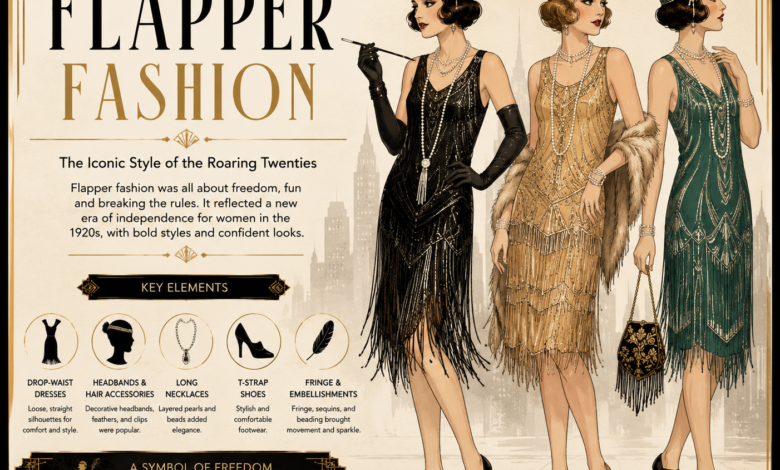
Flapper fashion is one of those styles that never really disappears. Even though it became famous more than a century ago, its short dresses, fringe details, decorative accessories, and carefree attitude still influence modern fashion. When people picture the 1920s, they often imagine women dancing at lively parties in sparkling dresses, wearing bobbed hair and statement accessories. That image captures the spirit of flapper fashion perfectly.
But flapper style was about more than looking glamorous. It represented a major change in women’s fashion and social attitudes. After World War I, everyday life began to change, and clothing changed with it. Women increasingly wanted clothes that allowed them to move freely, socialize, work, and enjoy new forms of entertainment.
Today, flapper fashion remains popular for vintage-themed parties, costume events, weddings, theater productions, photography, and everyday fashion inspiration. Understanding where the style came from makes it even more interesting because every dress, accessory, and hairstyle tells part of the story.
Table of Contents
- What Is Flapper Fashion?
- The History Behind Flapper Style
- Key Features of Flapper Fashion
- Flapper Dresses and Their Unique Design
- Accessories That Completed the Flapper Look
- Flapper Hairstyles and Makeup
- Why Flapper Fashion Became So Popular
- How Flapper Fashion Influences Modern Style
- How to Create a Flapper-Inspired Outfit Today
- Common Questions About Flapper Fashion
- Final Thoughts
What Is Flapper Fashion?
Flapper fashion refers to the distinctive clothing and beauty style associated with the young women known as flappers during the 1920s. The style is usually recognized by loose-fitting dresses, dropped waistlines, decorative patterns, fringe, beads, and bold accessories. Instead of emphasizing the traditional body shape that had been common in earlier decades, many 1920s designs created a straighter and more relaxed silhouette.
The style was closely connected with the changing social atmosphere of the 1920s. Young women were becoming more visible in public life, enjoying entertainment, dancing, attending parties, and embracing new ideas about independence. Fashion naturally reflected these changes. Clothes needed to be practical enough for movement but stylish enough for the exciting social world of the decade.
One of the most important things about flapper fashion is its sense of freedom. The dresses were generally easier to move in than some earlier women’s clothing, and shorter hemlines made dancing more comfortable. The overall look was youthful, playful, and confident, which helped make it one of the most recognizable fashion movements of the twentieth century.
The History Behind Flapper Style
The flapper era developed during the 1920s, a period often called the Roaring Twenties. The years following World War I brought significant cultural and social changes in many Western countries. Music, cinema, nightlife, automobiles, advertising, and consumer culture all became increasingly influential.
Fashion designers responded to these changes with clothing that looked modern and different from the styles of the previous generation. The restrictive shapes associated with earlier women’s fashion gradually gave way to simpler silhouettes. The shift was not caused by one designer or one event; it developed through a combination of cultural, economic, and artistic influences.
The word “flapper” itself became associated with a particular image of young women who challenged traditional expectations. However, it is important to remember that not every woman in the 1920s dressed like a classic flapper. The famous flapper image represents one part of a much broader fashion culture. Nevertheless, it became powerful enough to define the decade in popular memory.
Key Features of Flapper Fashion
One of the easiest ways to recognize flapper fashion is by its relaxed silhouette. Dresses often hung loosely from the shoulders instead of closely following the waist and hips. The dropped waist became particularly associated with 1920s clothing, creating a long, straight visual line.
Decoration was another major feature. Dresses could include beads, sequins, embroidery, metallic details, lace, or fringe. These elements became especially noticeable under the lights of dance halls and evening parties. Fringe was practical as well as decorative because it moved dramatically while the wearer danced.
Flapper fashion also embraced accessories. Headbands, decorative hairpieces, long necklaces, gloves, handbags, and embellished shoes could transform a relatively simple dress into a complete evening outfit. The result was glamorous without necessarily being overly complicated.
Flapper Dresses and Their Unique Design
The flapper dress is probably the most recognizable part of the entire style. Unlike many earlier dresses that emphasized the waist, flapper dresses often used a straight or tubular shape. The waistline could sit lower on the body, creating the famous dropped-waist effect.
Day dresses were often simpler and more practical, while evening dresses could be much more decorative. Evening designs frequently featured beads, sequins, fringe, embroidery, or geometric patterns. These details helped create a sense of movement and luxury, especially in the growing nightlife culture of the period.
Hemlines also became an important part of the changing fashion landscape. Skirts became noticeably shorter compared with many previous decades. This made dancing easier and contributed to the youthful image associated with the flapper. However, the exact length and style varied throughout the decade and between different social groups.
Accessories That Completed the Flapper Look
Accessories were essential to creating a recognizable flapper-inspired outfit. A simple dress could look completely different when paired with the right headpiece, necklace, shoes, and handbag. Accessories allowed women to express personality while following the general fashion direction of the era.
Headbands were particularly popular in the flapper image. They could be made from fabric, decorated with beads, feathers, jewels, or other ornamental details. Some designs were simple, while others were intentionally dramatic and eye-catching.
Long strands of beads or pearls were another recognizable feature. They added movement and visual interest to the straight silhouette of the dress. Small handbags, T-strap or Mary Jane-style shoes, gloves, and decorative hair accessories could complete the outfit without overwhelming it.
Flapper Hairstyles and Makeup
Fashion during the 1920s was not limited to clothing. Hair and makeup played a major role in creating the complete flapper appearance. Short hairstyles became increasingly fashionable, with the bob becoming one of the most recognizable looks of the decade.
Finger waves were also closely associated with 1920s beauty. This hairstyle created carefully shaped waves that framed the face and gave the hair a polished vintage appearance. While modern styling techniques can recreate the look more easily, the original hairstyles required considerable skill and patience.
Makeup also became more visible during the 1920s. Darker eye makeup, defined lips, and carefully shaped brows contributed to the dramatic evening look associated with the era. However, modern recreations do not need to copy historical makeup exactly. A softer interpretation can capture the vintage mood while still feeling contemporary.
Why Flapper Fashion Became So Popular
Flapper fashion became popular because it reflected the changing lifestyle of the time. Clothing was becoming more practical and less restrictive, while entertainment and nightlife were becoming important parts of urban culture. Dancing, cinema, jazz music, and social gatherings created new environments where fashionable clothing could be seen and admired.
The growth of mass media also helped spread fashion trends. Magazines, movies, advertising, and department stores exposed people to new styles. Instead of fashion remaining limited to a small group of wealthy individuals, trends could reach much larger audiences.
There was also a strong emotional connection between fashion and the mood of the decade. After the hardships of World War I, the 1920s brought a desire for entertainment, celebration, and modernity. Flapper fashion captured that energy through movement, decoration, and a more relaxed approach to clothing.
How Flapper Fashion Influences Modern Style
Flapper fashion continues to appear in modern clothing because its design principles are visually distinctive. Fringe, sequins, dropped waistlines, beaded details, and vintage-inspired accessories regularly return to fashion collections and special-event clothing.
The influence can be especially noticeable in eveningwear. Designers often use fringe or sparkling embellishments to create movement and drama. A modern dress may not look exactly like a 1920s flapper dress, but it can still borrow the same ideas.
Modern fashion also appreciates the versatility of vintage inspiration. Instead of copying an entire historical outfit, people can take one element, such as a beaded headband or fringe detail, and combine it with contemporary clothing. This makes flapper-inspired style easier to wear without looking like a costume.
How to Create a Flapper-Inspired Outfit Today
Creating a flapper-inspired outfit does not require finding an original 1920s dress. A modern dress with a relaxed shape can provide the foundation. Look for details such as fringe, beads, sequins, geometric patterns, or a lower waistline if you want a stronger connection to the historical style.
Accessories can make the biggest difference. Try adding a decorative headband, a long necklace, simple gloves, or vintage-inspired shoes. You can choose just two or three accessories rather than wearing every traditional element at once. This usually creates a more balanced and modern appearance.
Hair and makeup can also be adapted rather than copied. A short bob or vintage-inspired waves can suggest the era, while contemporary makeup keeps the overall look comfortable and current. The goal is to capture the spirit of flapper fashion rather than recreate a museum display.
Common Questions About Flapper Fashion
What is flapper fashion?
Flapper fashion is a style associated with young women during the 1920s. It is commonly recognized by relaxed dresses, dropped waistlines, fringe, beads, decorative accessories, and vintage-inspired hairstyles.
Why were flapper dresses loose?
The loose silhouette reflected changing fashion preferences and provided greater freedom of movement. It also created a straighter shape that contrasted with earlier styles that emphasized the waist.
What accessories did flappers wear?
Popular accessories included decorative headbands, long necklaces, gloves, small handbags, ornamental hairpieces, and vintage-style shoes. The exact combination depended on the occasion and personal taste.
Was every woman in the 1920s a flapper?
No. The flapper was a specific cultural and fashion image, particularly associated with young women and modern urban lifestyles. Many women during the 1920s continued to wear more traditional styles.
Is flapper fashion still popular today?
Yes. Flapper-inspired designs continue to appear in costumes, eveningwear, themed parties, theater, photography, and modern fashion. Fringe, sequins, beads, and vintage silhouettes remain popular sources of inspiration.
Final Thoughts
Flapper fashion was much more than a collection of pretty dresses and sparkling accessories. It represented a period when fashion was changing alongside society. The relaxed silhouettes, shorter skirts, decorative details, and bold accessories captured the energy and optimism associated with the 1920s.
What makes the style particularly interesting is how easily its key ideas can still work today. You do not need to wear a complete vintage costume to appreciate the look. A modern fringe dress, a beaded accessory, or a vintage-inspired hairstyle can bring a subtle touch of the Jazz Age into a contemporary outfit.
Ultimately, flapper fashion remains memorable because it combines history, creativity, movement, and personality. More than a century later, its influence continues to remind us that fashion is not just about clothing—it is also a reflection of how people live, think, and express themselves.
You May Also Read: Unblocked Games