Code of Ethics Example: A Complete Guide to Creating Ethical Standards That Work

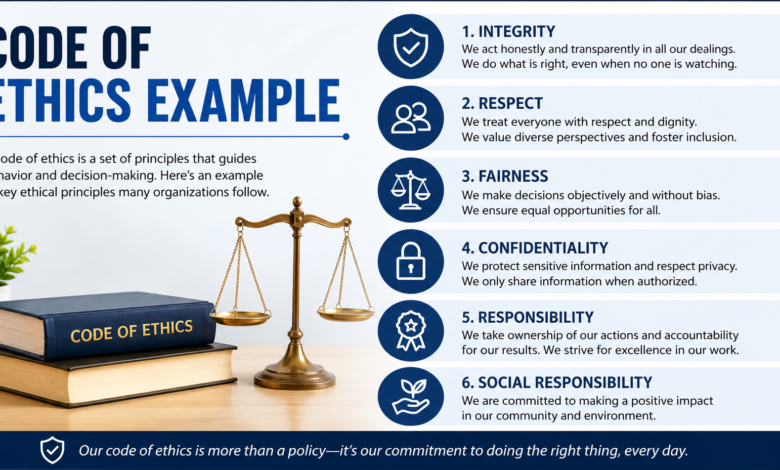
A code of ethics example can help individuals and organizations understand how to establish clear moral principles that guide everyday decisions. Whether you own a small business, manage a large corporation, work in healthcare, or teach students, having a well-written code of ethics builds trust, improves accountability, and creates a positive workplace culture.
Many people search for a code of ethics example because writing one from scratch can feel overwhelming. The good news is that an effective code of ethics doesn’t have to be complicated. It simply needs to communicate the values, expectations, and standards that everyone should follow.
In this guide, you’ll learn what a code of ethics is, why it matters, what it should include, and several practical examples that you can customize for your own needs.
What Is a Code of Ethics?
A code of ethics is a written document that outlines the moral values, professional standards, and expected behaviors within an organization or profession. It serves as a guide for making ethical decisions and handling challenging situations.
Rather than focusing only on rules, a code of ethics emphasizes principles like honesty, fairness, respect, integrity, accountability, and professionalism. These values help employees and leaders make consistent decisions even when policies don’t provide a direct answer.
Looking at a code of ethics example makes it much easier to understand how these principles are applied in real-life situations. Instead of vague statements, good examples provide clear expectations that everyone can follow.
Why Every Organization Needs a Code of Ethics
A strong code of ethics creates consistency throughout an organization. Employees understand what behavior is expected, managers have guidelines for handling difficult situations, and customers gain confidence in the company’s integrity.
It also reduces misunderstandings. When ethical standards are documented, everyone knows the difference between acceptable and unacceptable behavior. This helps prevent workplace conflicts and supports fair decision-making.
Another major benefit is reputation. Businesses known for ethical practices often attract loyal customers, talented employees, and long-term business partners. A well-written code of ethics example demonstrates a company’s commitment to doing the right thing.
Key Elements of a Good Code of Ethics
Every organization is unique, but most ethical codes include several common sections that establish clear expectations.
The first element is integrity. Employees should always act honestly, avoid misleading others, and communicate truthfully with customers and coworkers. Integrity forms the foundation of every ethical workplace.
Respect is equally important. Team members should treat everyone fairly regardless of background, position, or personal beliefs. Respect encourages diversity, teamwork, and healthy communication.
Accountability is another essential component. Individuals should take responsibility for their actions, admit mistakes, and work toward correcting problems instead of hiding them.
Many organizations also include confidentiality. Employees often handle sensitive information that should never be shared without proper authorization.
When reviewing a code of ethics example, you’ll notice these principles appear repeatedly because they are relevant across nearly every industry.
Code of Ethics Example for a Business
Below is a simple code of ethics example that many businesses can adapt.
Integrity
We conduct all business honestly and transparently. Every employee is expected to communicate truthfully with customers, coworkers, and business partners.
We avoid misleading advertising, false promises, or deceptive business practices under any circumstances.
We honor our commitments and accept responsibility for our decisions.
Respect
Every employee deserves a workplace free from discrimination, harassment, bullying, and intimidation.
We encourage teamwork by listening respectfully to different opinions and treating everyone with dignity.
We value diversity because different perspectives strengthen our organization.
Professionalism
Employees should maintain professional behavior during all business interactions.
Company resources must be used responsibly and only for legitimate business purposes.
Everyone is expected to follow company policies while representing the organization positively.
Confidentiality
Sensitive customer information must remain private.
Business strategies, financial information, and proprietary data should never be shared without authorization.
Employees must protect confidential information even after leaving the company.
Accountability
We acknowledge mistakes and work quickly to correct them.
Employees are encouraged to report unethical behavior without fear of retaliation.
Leaders will investigate concerns fairly and consistently.
This code of ethics example can be modified for businesses of all sizes.
Code of Ethics Example for Employees
An employee-focused code of ethics is usually shorter but still covers important expectations.
Employees should arrive on time, complete assigned work responsibly, and maintain honesty in all professional activities.
Everyone should avoid conflicts of interest that could affect their judgment or harm the company.
Employees should communicate respectfully with coworkers, customers, vendors, and supervisors while maintaining professionalism in every interaction.
Using a practical code of ethics example helps employees understand exactly what behaviors support a positive workplace.
Benefits of Following a Code of Ethics
Organizations that consistently follow ethical standards experience numerous long-term benefits.
Employee trust increases because everyone understands the rules and knows they will be applied fairly.
Customer confidence also grows. Consumers prefer doing business with organizations that demonstrate honesty and transparency.
Ethical workplaces generally experience fewer legal disputes, stronger teamwork, improved employee satisfaction, and better public reputations.
Another advantage is improved decision-making. Instead of guessing what is right, employees can refer to the organization’s code of ethics example for guidance.
Common Mistakes When Writing a Code of Ethics
One common mistake is using overly complicated language. Ethical guidelines should be simple enough that everyone can understand them regardless of their role.
Another mistake is being too vague. Statements like “always do the right thing” sound positive but don’t explain what employees should actually do.
Some organizations also fail to enforce their ethical standards. Even the best code of ethics example becomes meaningless if leadership ignores violations or applies rules inconsistently.
Finally, companies should review and update their code regularly. Ethical challenges evolve as industries and technology continue to change.
Tips for Creating an Effective Code of Ethics
Start by identifying your organization’s core values. These values should influence every section of the document.
Keep the language clear, positive, and practical. Employees should immediately understand the expectations without needing legal interpretation.
Include examples whenever possible. Real-world situations help employees apply ethical principles in daily work.
Train employees regularly instead of simply distributing the document once. Ethical behavior becomes stronger when people discuss realistic scenarios and ask questions.
Review your code of ethics example every year to ensure it reflects current business practices and organizational goals.
Frequently Asked Questions
What is a code of ethics?
A code of ethics is a written document that explains the ethical values and behavioral expectations within an organization or profession.
Why is a code of ethics important?
It promotes honesty, accountability, fairness, professionalism, and consistent decision-making while helping build trust with employees and customers.
Can small businesses have a code of ethics?
Absolutely. Even businesses with only a few employees benefit from having clear ethical guidelines.
How often should a code of ethics be updated?
Most organizations review their ethical policies annually or whenever significant legal, operational, or organizational changes occur.
Is a code of ethics legally required?
Not always. While many industries encourage or require ethical standards, many businesses adopt a code voluntarily because it strengthens culture and reputation.
Conclusion
A well-written code of ethics example serves as more than just a document—it becomes the foundation of an organization’s culture. By establishing clear expectations for honesty, respect, accountability, professionalism, and confidentiality, businesses create environments where employees can make better decisions and customers feel confident in their relationships with the company.
Whether you’re creating ethical guidelines for a startup, a nonprofit organization, a school, or an established corporation, the principles remain remarkably consistent. Focus on clarity, fairness, and practical guidance that employees can easily follow in everyday situations. A thoughtfully designed code of ethics example not only reduces misunderstandings but also strengthens trust, improves teamwork, and supports long-term success. When ethical values are consistently practiced rather than simply written down, they become a powerful part of an organization’s identity and lasting reputation.
You May Also Read: Redbubble Stickers