Introduction
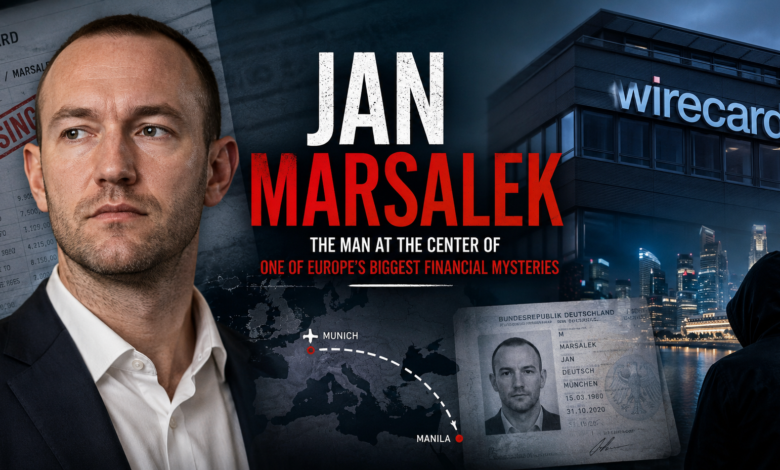
The name Jan Marsalek has become synonymous with one of the biggest financial scandals in modern European history. Once considered a rising star in the fintech world, he transformed from a respected executive into one of the world’s most wanted white-collar fugitives. His disappearance after the collapse of Wirecard has sparked countless investigations, documentaries, and news reports, making his story one of the most fascinating corporate mysteries of the 21st century.
What makes Jan Marsalek such an intriguing figure isn’t just the billions of dollars that disappeared under his watch. It’s the combination of international finance, alleged intelligence connections, secretive travel, and years spent evading authorities. His case has blurred the lines between corporate fraud, international espionage, and organized crime, leaving investigators with more questions than answers.
Whether you’re interested in financial crimes, corporate governance, or global politics, understanding the story of Jan Marsalek provides valuable insights into how one individual allegedly manipulated a multinational company while remaining hidden from authorities. This guide explores his background, career, controversies, and the ongoing search for one of Europe’s most elusive fugitives.
Who Is Jan Marsalek?
Jan Marsalek is an Austrian businessman best known for serving as the Chief Operating Officer (COO) of Wirecard AG, a German payment processing company that was once celebrated as one of Europe’s leading fintech success stories. During his time at Wirecard, he played a significant role in expanding the company’s international operations and building relationships across multiple markets.
Unlike many corporate executives who follow traditional career paths, Marsalek entered the business world at a young age. He reportedly left school before completing his formal education, choosing instead to pursue entrepreneurial opportunities. His confidence, ambition, and technical knowledge quickly earned him recognition within the fintech industry.
Despite his impressive rise, his reputation dramatically changed after Wirecard admitted that €1.9 billion supposedly held in trustee accounts simply did not exist. Investigators soon focused on Jan Marsalek, believing he had extensive knowledge of the company’s financial operations and potentially played a central role in the fraud.
The Rise of Wirecard and Marsalek’s Influence
Wirecard started as a payment processing company that benefited from the rapid growth of online commerce. Over time, it expanded into digital payments, banking services, and international financial technology, eventually becoming one of Germany’s most valuable publicly traded companies.
As COO, Jan Marsalek became one of the company’s most influential executives. He managed numerous international projects, negotiated business partnerships, and represented Wirecard in high-level meetings across Europe, Asia, and the Middle East. Many colleagues viewed him as intelligent, persuasive, and highly capable of solving complex business challenges.
His growing authority within the organization also meant that he had access to sensitive financial information and strategic operations. This level of influence later became a major focus for investigators trying to determine how the alleged fraud continued for years without being detected.
The Wirecard Scandal Explained
The collapse of Wirecard shocked financial markets around the world. In 2020, auditors announced they could not verify approximately €1.9 billion that the company claimed was held in escrow accounts in Asia. After further investigation, the money was determined to be missing.
The revelation triggered one of the largest accounting scandals in European corporate history. Wirecard quickly filed for insolvency, investors lost billions, and regulators launched criminal investigations involving several senior executives.
Authorities believe Jan Marsalek possessed detailed knowledge of Wirecard’s international financial arrangements. Shortly before the scandal became public, he disappeared from Germany and has remained a fugitive ever since, making him one of the most sought-after individuals connected to corporate fraud.
The Mysterious Disappearance of Jan Marsalek
One of the most fascinating aspects of the story is how Jan Marsalek vanished almost immediately after the scandal unfolded. Reports suggest he traveled from Germany shortly before his arrest became likely, avoiding law enforcement entirely.
Since then, numerous investigations have attempted to track his movements. Various reports have claimed he traveled through multiple countries using complex international networks. While several sightings have been reported, authorities have not publicly confirmed his exact location.
His disappearance has fueled widespread speculation. Journalists, intelligence experts, and financial investigators have all explored different theories regarding how he managed to evade capture for such an extended period.
Alleged Intelligence Connections
Beyond financial fraud, Jan Marsalek has also been linked through media reports and investigations to alleged relationships with intelligence operatives and international security networks. These reports have attracted enormous public attention because they suggest his activities may have extended well beyond corporate finance.
Investigative journalists have reported that Marsalek maintained contacts with individuals connected to security organizations and geopolitical affairs. While many of these claims remain under investigation, they have added another layer of complexity to the case.
These alleged connections have transformed the Wirecard scandal from a corporate accounting failure into an international investigation involving multiple countries and law enforcement agencies.
Lessons Businesses Can Learn from the Case
The story of Jan Marsalek highlights the importance of strong corporate governance. Even large, publicly traded companies can face serious risks when internal controls fail or executive oversight becomes ineffective.
Independent audits, transparent financial reporting, and effective regulatory supervision are essential for maintaining investor confidence. Organizations should encourage accountability at every management level while ensuring that financial information can be independently verified.
Businesses should also foster ethical leadership. A company may appear financially successful for years, but without integrity and transparency, long-term sustainability becomes increasingly difficult to maintain.
Why the Story Still Matters Today
Years after the collapse of Wirecard, Jan Marsalek continues to capture global attention because many questions remain unanswered. Authorities continue investigating the financial networks involved, while journalists regularly uncover new information related to the case.
The scandal has influenced discussions about financial regulation throughout Europe and has prompted governments to strengthen oversight of fintech companies. Investors now pay closer attention to corporate governance, auditing standards, and executive accountability.
The ongoing search for Marsalek also demonstrates how international cooperation has become increasingly important in combating financial crime. Cross-border investigations require coordination between multiple agencies, highlighting the global nature of modern corporate fraud.
Conclusion
The story of Jan Marsalek serves as a powerful reminder that rapid corporate growth must always be accompanied by transparency, accountability, and effective oversight. His remarkable rise within Wirecard, followed by the company’s dramatic collapse and his mysterious disappearance, has made him one of the most recognizable figures in financial crime investigations.
Although many details continue to emerge through ongoing investigations and court proceedings, the case has already reshaped conversations about corporate governance, auditing standards, and financial regulation. It has also demonstrated how difficult international investigations can become when key individuals disappear across borders.
As authorities continue searching for Jan Marsalek, his story remains one of the most extraordinary examples of how ambition, secrecy, and weak oversight can combine to produce a scandal with worldwide consequences. For businesses, investors, and regulators alike, the lessons from this case will likely influence financial governance for years to come.
You May Also Read: Free Car Wash Near Me