Neurospicy Meaning: A Complete Guide to Understanding the Popular Internet Term

Introduction
If you have spent any time on social media recently, chances are you have come across the phrase neurospicy meaning. The term has become increasingly popular across platforms like TikTok, Instagram, Reddit, and X, where people use it to describe themselves or others in a humorous and lighthearted way. While it may sound like internet slang, there is actually a deeper story behind the word and why so many people identify with it.
Understanding the neurospicy meaning is important because language evolves alongside culture. New words often emerge to help people describe experiences that traditional terms may not fully capture. For many individuals, “neurospicy” feels more approachable, less clinical, and even empowering compared to formal medical terminology.
In this guide, you’ll learn everything you need to know about the neurospicy meaning, where the word came from, who uses it, why it has become so popular, and whether it is appropriate in different situations. By the end, you’ll have a clear understanding of this modern expression and how it fits into conversations about neurodiversity.
What Does Neurospicy Mean?
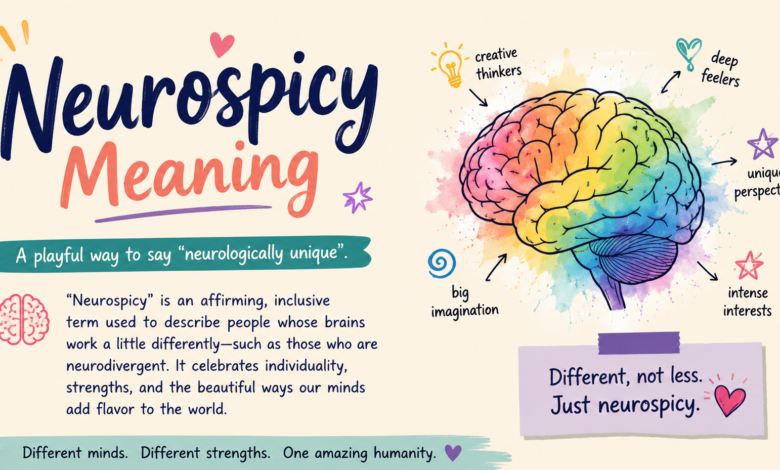
The neurospicy meaning refers to a playful, informal way of describing someone who is neurodivergent. Neurodivergent individuals may have conditions such as ADHD, autism, dyslexia, dyspraxia, Tourette syndrome, or other neurological differences. Rather than using clinical language, many people jokingly refer to themselves as “neurospicy.”
The word combines “neuro,” relating to the brain or nervous system, with “spicy,” a slang term often used online to describe something unique, exciting, or different. Together, the phrase creates a fun and memorable way to acknowledge neurological differences without making them seem negative.
It is important to remember that the neurospicy meaning is not an official medical term. Healthcare professionals do not use it for diagnosis or treatment. Instead, it is a piece of internet slang that has been embraced by many members of the neurodivergent community as a way to celebrate individuality and reduce stigma.
The Origin of the Word Neurospicy
Like many internet expressions, the exact origin of the word is difficult to trace. However, the term began gaining attention through social media communities where creators openly discussed ADHD, autism, anxiety, executive dysfunction, and everyday life experiences.
As videos about neurodiversity became more common, creators looked for words that felt less intimidating than medical labels. The neurospicy meaning quickly resonated because it balanced humor with self-acceptance. It allowed people to discuss real challenges while keeping conversations approachable and relatable.
Today, the word has spread far beyond its original online communities. It appears in memes, podcasts, blogs, online support groups, and casual conversations. Although its popularity continues to grow, the way people interpret the term may vary depending on personal preference and cultural context.
Why Has Neurospicy Become So Popular?
One reason the neurospicy meaning has become so popular is that it encourages positive conversations about neurodiversity. Instead of focusing only on challenges, the word highlights uniqueness and individuality in a friendly and humorous way.
Social media has also played a major role in spreading the term. Short videos explaining ADHD habits, autistic experiences, sensory sensitivities, and executive functioning often use the hashtag #neurospicy. This has introduced millions of people to the expression in an engaging format.
Another factor behind its popularity is community. Many neurodivergent individuals find comfort in knowing they are not alone. Shared language helps people connect, laugh together, and discuss their experiences without always relying on formal medical terminology.
Who Uses the Term Neurospicy?
The neurospicy meaning is most commonly used by people who identify as neurodivergent. Individuals with ADHD or autism often describe themselves as neurospicy in social media posts, conversations with friends, or online communities.
Some parents, educators, mental health advocates, and content creators also use the term when discussing neurodiversity in an inclusive and supportive way. Their goal is often to create a welcoming environment where neurological differences can be discussed without fear or shame.
However, not everyone enjoys the label. Some neurodivergent individuals prefer medically accurate terminology or simply identify with their specific diagnosis. Respecting personal preferences is always important, since language affects everyone differently.
Is Neurospicy an Official Medical Term?
No, the neurospicy meaning does not come from psychology, psychiatry, or medical science. It is entirely informal and should never replace professional medical advice or diagnosis.
Doctors, psychologists, and therapists typically use terms such as neurodivergent, autism spectrum disorder, ADHD, learning disability, or other recognized clinical diagnoses. These terms provide clarity during assessments and treatment planning.
Although the expression is informal, that does not make it meaningless. Language often develops within communities before entering mainstream conversations. The popularity of neurospicy reflects changing attitudes toward neurodiversity and increased public awareness.
Neurospicy vs. Neurodivergent
Many people confuse these two terms, but there are important differences. The neurospicy meaning is playful and informal, while neurodivergent is a recognized umbrella term describing people whose brains function differently from what society considers typical.
Neurodivergent includes a broad range of neurological conditions and learning differences. It is widely accepted in educational, workplace, and healthcare discussions because it communicates information clearly and respectfully.
Neurospicy, on the other hand, is often used among friends or online communities where humor and self-expression are part of the conversation. It should not automatically replace more formal language, especially in professional settings.
Why Some People Love the Term
Many individuals appreciate the neurospicy meaning because it helps reduce stigma. Turning something that once felt embarrassing into a source of pride can be empowering and emotionally healing.
Humor is another reason for the term’s popularity. Living with ADHD, autism, or other neurological differences often comes with unique daily experiences. Referring to those moments as “being neurospicy” allows people to laugh while still acknowledging real challenges.
The expression also creates a sense of belonging. Online communities often develop shared language that strengthens identity and encourages supportive conversations among members who understand each other’s experiences.
Why Some People Dislike the Term
Despite its popularity, not everyone embraces the neurospicy meaning. Some individuals believe the word minimizes the serious difficulties associated with neurodevelopmental conditions.
Others feel that internet slang can oversimplify complex medical conditions. While humor has value, it should never dismiss the challenges people face in education, employment, relationships, or daily functioning.
There are also people who simply prefer direct language. Rather than saying they are neurospicy, they choose to identify as autistic, having ADHD, or being neurodivergent. Their preference deserves equal respect.
When Is It Appropriate to Use Neurospicy?
The neurospicy meaning works best in casual conversations, online discussions, memes, and personal storytelling. Many people comfortably use it among friends who understand the context and appreciate the humor.
In professional environments, however, more formal terminology is generally recommended. Medical appointments, school evaluations, workplace accommodations, and legal documentation should use recognized clinical language rather than internet slang.
The safest approach is to follow individual preferences. If someone describes themselves as neurospicy, it is usually acceptable to mirror their language. If they prefer another term, respecting that choice shows empathy and understanding.
Common Misconceptions About Neurospicy
One common misunderstanding is that the neurospicy meaning refers only to ADHD. In reality, many different neurodivergent individuals use the term, including autistic people and those with various learning differences.
Another misconception is that everyone likes the word. While many embrace it, others find it uncomfortable or dismissive. There is no universal agreement, which is why respectful communication remains important.
Some people also assume the term has scientific backing. In truth, neurospicy is simply a creative internet expression rather than an officially recognized psychological or medical concept.
Final Thoughts
The neurospicy meaning reflects how language continues to evolve alongside greater awareness of neurodiversity. It offers a playful and positive way for many people to describe neurological differences while building community and reducing stigma. Although it is not an official medical term, it has become a meaningful part of online conversations for countless individuals.
At the same time, it is essential to remember that everyone has different preferences. Some people proudly call themselves neurospicy, while others prefer terms like neurodivergent, autistic, or ADHD. Neither approach is more correct than the other—the most respectful choice is simply to use the language that individuals prefer for themselves.
As discussions around neurodiversity continue to grow, understanding the neurospicy meaning can help create more inclusive, thoughtful, and compassionate conversations. Whether you encounter the term on social media or hear it in everyday life, you’ll now know both its lighthearted nature and the deeper message of acceptance that many people associate with it.
You May Also Read: Neurospicy