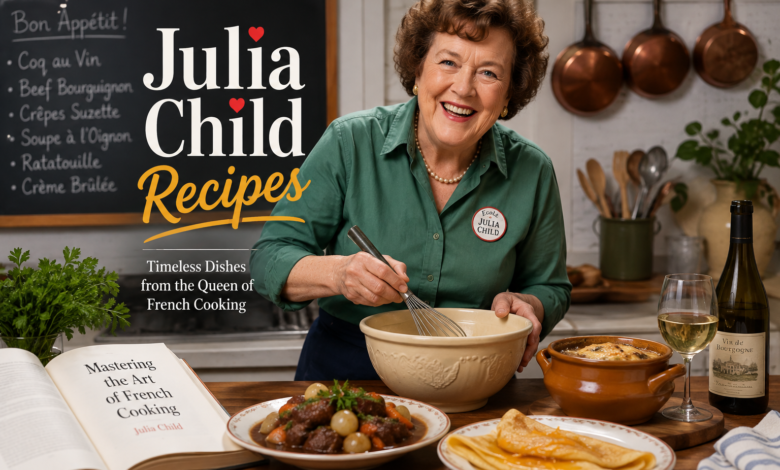
Julia Child recipes have a special place in the history of American cooking. She did more than introduce people to French cuisine; she showed home cooks that elegant food could be prepared in an ordinary kitchen with patience, practice, and a little confidence. Her approach made French cooking feel less intimidating and much more enjoyable.
From buttery sauces and perfectly cooked vegetables to roast chicken, beef dishes, soups, and classic desserts, Julia Child’s recipes are known for their rich flavors and careful techniques. What makes them especially interesting is that they are not simply about following instructions. They teach cooks why certain steps matter.
Today, many people still search for Julia Child recipes because her cooking philosophy remains useful. You do not need professional equipment or years of culinary training to learn from her methods. With a few basic ingredients and a willingness to slow down, you can create dishes that feel impressive without making cooking unnecessarily complicated.
Table of Contents
- Who Was Julia Child?
- Why Julia Child Recipes Are Still Popular
- The Most Popular Julia Child Recipes
- Julia Child’s Famous Beef Bourguignon
- Julia Child’s Classic Roast Chicken
- French Omelet and Egg Techniques
- Julia Child Recipes for Vegetables and Side Dishes
- Classic French Sauces Inspired by Julia Child
- Julia Child Desserts Worth Trying
- Tips for Cooking Like Julia Child
- Why Her Recipes Work So Well
- Frequently Asked Questions
- Final Thoughts
Who Was Julia Child?
Julia Child was an American chef, author, and television personality who played a major role in making French cooking accessible to American home cooks. She became widely recognized after the publication of Mastering the Art of French Cooking, a cookbook she co-authored with Simone Beck and Louisette Bertholle. The book introduced detailed French cooking techniques to readers who may have previously considered the cuisine too complicated.
What made Julia different from many cooking personalities was her willingness to explain the process. She did not treat cooking as something mysterious that only professional chefs could understand. Instead, she encouraged people to learn through practice. If something went wrong, her attitude was essentially to learn from it and keep going.
Her television career made that philosophy even more popular. On programs such as The French Chef, she demonstrated techniques in a relaxed and entertaining way. Her personality helped remove some of the fear surrounding French cuisine, especially for home cooks who had never worked with classic sauces, roasted meats, or traditional French preparations.
Why Julia Child Recipes Are Still Popular
One reason Julia Child recipes remain popular is that they focus heavily on technique. Modern recipes often try to save time, which can certainly be useful, but Julia’s cooking often teaches readers how to build flavor from the beginning. Browning meat properly, cooking onions slowly, preparing a sauce carefully, and understanding heat can make a major difference.
Another reason is versatility. Many of the techniques associated with Julia Child can be applied to other dishes. Once you understand how to make a basic sauce or properly sauté vegetables, you are not limited to one particular recipe. You have learned a cooking skill that can be used again and again.
There is also something comforting about traditional French food. Rich sauces, roasted chicken, hearty stews, fresh vegetables, eggs, and homemade desserts have a timeless quality. Even when cooking trends change, these dishes continue to appeal to people because they are based on familiar ingredients and satisfying flavors.
The Most Popular Julia Child Recipes
When people search for Julia Child recipes, several dishes appear again and again. Her beef bourguignon is probably one of the most recognizable examples. It combines beef, vegetables, herbs, and wine into a slow-cooked dish with deep flavor.
Roast chicken is another classic associated with her cooking philosophy. Rather than relying on complicated ingredients, the focus is on proper preparation, seasoning, temperature, and timing. A simple chicken can become a memorable meal when those fundamentals are handled correctly.
Other popular dishes connected with Julia Child’s French cooking include omelets, potato dishes, vegetable preparations, crêpes, chocolate desserts, and a wide variety of sauces. Together, these recipes demonstrate the range of traditional French cuisine and the importance Julia placed on mastering basic techniques.
Julia Child’s Famous Beef Bourguignon
Beef bourguignon is one of the dishes most closely associated with Julia Child Recipes Child. It is a classic French beef stew traditionally prepared with beef, red wine, onions, mushrooms, herbs, and other flavorful ingredients. The dish is not designed to be rushed. Its appeal comes from slow cooking and the gradual development of flavor.
A major lesson from this type of recipe is the importance of browning. When pieces of beef are browned properly, they develop a deeper savory character. Trying to cook too much meat in the pan at once can cause steaming instead of browning, which is why patience matters.
The vegetables and cooking liquid also contribute to the finished dish. As the stew cooks slowly, the flavors have time to blend together. The result is tender meat surrounded by a rich, comforting sauce. It is the kind of meal that often tastes even better when enjoyed with simple bread, potatoes, or another understated side.
Julia Child’s Classic Roast Chicken
Roast chicken may sound simple, but it is an excellent example of Julia Child Recipes Child’s approach to cooking. Instead of treating chicken as an ordinary weeknight ingredient, she showed how proper preparation could turn it into a centerpiece worthy of a special meal.
The key is paying attention to the basics. The chicken should be prepared carefully, seasoned appropriately, and cooked at a temperature that allows the meat to become tender while the exterior develops appealing color. Cooking times can vary depending on the size of the bird and the oven, so relying on a food thermometer is a sensible modern approach.
Roast chicken also demonstrates why resting meat matters. Allowing the chicken to rest after cooking gives the juices time to redistribute, making it easier to carve and helping the meat remain moist. Served with vegetables and a flavorful pan sauce, roast chicken can become an impressive yet approachable dinner.
French Omelet and Egg Techniques
Eggs were another area where Julia Child Recipes Child’s emphasis on technique really stood out. A French-style omelet is generally much softer and more delicate than the large, deeply browned omelets many people are familiar with.
The goal is not simply to cook eggs. It is to control the heat and movement of the pan so the eggs set properly without becoming dry. This can take practice, but that is exactly the kind of cooking lesson Julia Child Recipes encouraged.
Egg dishes are also an excellent starting point for beginners who want to learn classic techniques. Eggs are relatively inexpensive, cook quickly, and respond immediately to changes in temperature. Practicing with them can help cooks develop better control over a pan and understand how heat affects food.
Julia Child Recipes for Vegetables and Side Dishes
French cooking is not only about rich sauces and meat. Julia Child Recipes Child also demonstrated how vegetables could become exciting when prepared with care. Simple ingredients such as carrots, green beans, potatoes, mushrooms, and onions can taste completely different depending on how they are cooked.
One of the important ideas is avoiding overcooking. Vegetables should generally retain an appealing texture rather than becoming completely soft and dull. Seasoning also matters. Salt, butter, herbs, and other simple ingredients can enhance vegetables without overwhelming their natural flavor.
Potatoes are particularly versatile in classic French cooking. They can be roasted, sautéed, mashed, or incorporated into more elaborate dishes. The lesson is that a basic ingredient does not need to be complicated to be delicious. Good technique can often make the biggest difference.
Classic French Sauces Inspired by Julia Child
Sauces are an important part of traditional French cooking, and Julia Child Recipes Child helped American audiences understand their purpose. A good sauce can bring together meat, vegetables, and starches while adding richness and depth.
Classic sauces often begin with a small number of fundamental techniques. Depending on the sauce, this may involve creating a roux, reducing a liquid, incorporating butter, or carefully controlling the cooking temperature. These methods may sound technical at first, but they become much easier with practice.
The important thing is to avoid rushing. Sauces can change quickly, especially when heat is too high. Stirring, tasting, adjusting seasoning, and watching consistency are all part of the process. Once you understand these fundamentals, you can adapt them to many different meals.
Julia Child Desserts Worth Trying
Julia Child Recipes Child’s influence also extends to French desserts. French baking and pastry can be technically demanding, but her teaching style encouraged cooks to understand the process rather than simply fear it.
Desserts associated with classic French cooking include crêpes, custards, chocolate preparations, fruit desserts, and cakes. These dishes demonstrate how texture can be just as important as flavor. A dessert may depend on achieving the right balance between crispness, softness, creaminess, or richness.
For home cooks, starting with something relatively straightforward can be a good idea. Once you become comfortable measuring ingredients accurately and controlling temperature, you can move toward more complicated pastry techniques. The same patient approach that works for savory cooking works in baking too.
Tips for Cooking Like Julia Child
The first tip is to read the entire recipe before starting. This is especially useful with traditional French recipes because some steps may require preparation before cooking begins. Having everything ready can make the cooking process much calmer.
The second tip is to focus on technique instead of speed. Modern cooking often emphasizes quick meals, but some classic dishes simply need time. Browning meat, reducing sauces, and slowly developing flavors cannot always be rushed without affecting the result.
Another helpful habit is to taste as you cook. Seasoning is rarely perfect automatically. Taste the food at appropriate stages and adjust salt, acidity, herbs, or other seasonings when necessary. This helps you develop the judgment that turns a recipe follower into a more confident cook.
Finally, do not be discouraged by mistakes. Julia Child Recipes Child famously promoted confidence in the kitchen. A sauce may split, vegetables may overcook, or a dish may not look exactly like the picture. These experiences are part of learning. Cooking improves through repetition.
Why Her Recipes Work So Well
Julia Child Recipes Child’s recipes work because they are built around sound culinary principles. Browning creates deeper flavor, slow cooking can tenderize tougher cuts of meat, proper seasoning brings ingredients into balance, and controlled heat helps preserve texture.
Her recipes also encourage cooks to understand the relationship between ingredients. Butter can add richness, wine can provide acidity and complexity, herbs can bring freshness, and stocks can add depth. When these elements are combined thoughtfully, even relatively simple ingredients can produce a sophisticated result.
Perhaps the biggest lesson is that good cooking does not necessarily require unusual ingredients. Technique, patience, and attention can transform everyday foods. That is one reason her work continues to appeal to new generations of cooks.
Frequently Asked Questions
What is Julia Child’s most famous recipe?
Beef bourguignon is widely regarded as one of the dishes most strongly associated with Julia Child Recipes Child. Her version helped popularize the classic French beef stew among American home cooks.
Are Julia Child recipes difficult for beginners?
Some are more advanced than modern quick recipes, but many are excellent for learning. Beginners can start with simpler dishes such as eggs, roast chicken, vegetables, or basic sauces before attempting more involved recipes.
What made Julia Child’s cooking style special?
Her focus on teaching technique made her approach distinctive. She explained cooking processes and encouraged people to practice rather than expect perfection on the first attempt.
Do Julia Child recipes require expensive ingredients?
Not necessarily. Many classic dishes use common ingredients such as chicken, beef, potatoes, eggs, vegetables, butter, herbs, and onions. Some traditional recipes may include wine or specialty ingredients, but substitutions can sometimes be made depending on the dish.
Can I make Julia Child recipes with modern kitchen equipment?
Yes. Modern ovens, thermometers, food processors, and other kitchen tools can make certain tasks easier. However, the basic cooking principles remain the same. Understanding heat, timing, seasoning, and technique is more important than having expensive equipment.
Final Thoughts
Julia Child Recipes Child recipes are about much more than recreating classic French dishes. They represent a way of thinking about food. Instead of rushing through every step, her approach encourages cooks to understand what they are doing and why it matters.
Whether you are preparing a hearty beef stew, roasting a chicken, making an omelet, cooking vegetables, or attempting a French dessert, there is something valuable to learn from her methods. The recipes may sometimes require more patience than a typical modern meal, but that extra attention can produce remarkable results.
The best way to explore Julia Child Recipes Child’s cooking is to start with one dish and take your time. Read the recipe carefully, prepare your ingredients, pay attention to temperature, and taste along the way. You do not have to become a professional chef overnight. With practice, the techniques become more natural, and that is where the real joy of cooking begins.
You May Also Read: Basil Seeds