Basil seeds have been quietly used in traditional drinks and desserts for generations, especially across South Asia and the Middle East. Today, these tiny black seeds are getting more attention because they swell when soaked in water and develop a soft, jelly-like coating. They are often added to refreshing drinks, desserts, smoothies, and other foods.
But what makes basil seeds interesting from a nutrition point of view? They contain dietary fiber, plant protein, fats, minerals, and various plant compounds. Research has also explored their possible antioxidant, metabolic, and digestive benefits. However, it is important to separate traditional uses and early research from benefits that have been firmly established in humans.
If you have heard basil seeds called sabja seeds, tukmaria, or sweet basil seeds, you may already know them from popular beverages. This guide explains what basil seeds are, their nutritional value, potential benefits, how to prepare them, possible precautions, and simple ways to include them in your diet.
Table of Contents
- What Are Basil Seeds?
- Basil Seeds vs. Chia Seeds
- Basil Seeds Nutrition
- Potential Health Benefits of Basil Seeds
- Basil Seeds and Digestive Health
- Basil Seeds and Blood Sugar
- Basil Seeds and Heart Health
- Basil Seeds and Weight Management
- How to Soak and Eat Basil Seeds
- Easy Ways to Add Basil Seeds to Your Diet
- Possible Side Effects and Precautions
- Frequently Asked Questions
- Final Thoughts
What Are Basil Seeds?
Basil seeds come from the basil plant, scientifically known as Ocimum basilicum. Although most people know basil as a fragrant herb used in cooking, the plant also produces small edible seeds. These seeds have traditionally been used in parts of Asia and the Middle East, particularly in beverages and desserts.
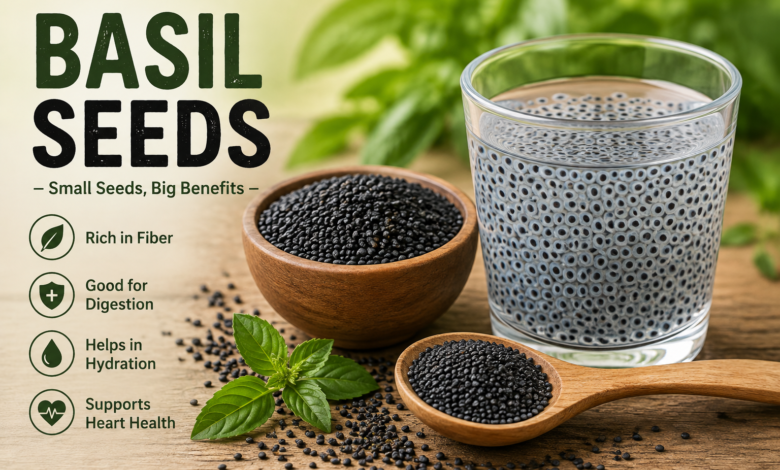
One of the most noticeable things about basil seeds is what happens when they meet water. Their outer layer forms a clear, gelatinous coating, making the seeds look slightly larger and softer. This natural mucilage is rich in polysaccharides and dietary fiber and is one reason basil seeds have attracted interest from food researchers.
Basil seeds are sometimes confused with chia seeds because they look similar and both develop a gel-like coating after soaking. However, they come from different plants and have different characteristics. Basil seeds are also commonly known by names such as sabja seeds and tukmaria in South Asian food traditions.
Basil Seeds vs. Chia Seeds
Basil seeds and chia seeds are often compared because both are tiny seeds that become gelatinous when soaked. They can both be used in drinks, puddings, smoothies, and other foods. Still, they should not be treated as exactly the same ingredient.
Basil seeds are particularly known for their mucilage, which forms around the seed after hydration. This mucilage has interesting functional properties and has been studied as a natural source of soluble fiber and as an ingredient that can help thicken or stabilize certain foods.
Chia seeds, meanwhile, have become more widely studied and marketed internationally as a source of fiber, fat, and plant-based nutrients. Basil seeds also contain useful nutrients, but the amount of research available is different. So, rather than asking which seed is automatically “better,” it makes more sense to choose based on taste, availability, dietary needs, and how you plan to use them.
Basil Seeds Nutrition
Basil seeds contain several nutrients that make them an interesting addition to a balanced diet. Research reviews have reported that their nutritional composition can vary depending on factors such as the basil variety, growing conditions, geographic origin, and processing methods.
Studies have found protein, dietary fiber, fats, minerals, and plant compounds in basil seeds. Reported protein levels in different samples have varied, while fiber content can also differ considerably between varieties and studies. This variation is important because it means there is no single nutritional profile that applies to every package of basil seeds.
The seeds also contain polyphenolic compounds and other bioactive substances that researchers are studying for their antioxidant and other biological activities. Still, finding a beneficial compound in a food does not automatically mean eating that food will prevent or treat a disease. Human dietary research is needed to establish how meaningful these effects are in everyday life.
Potential Health Benefits of Basil Seeds
Basil seeds are often promoted online for a long list of health benefits, but a balanced view is important. Their fiber and nutrient content makes them a potentially useful food, while some of the more impressive claims come from laboratory or animal studies rather than strong clinical trials in humans.
One of the clearest nutritional advantages is their fiber content. Fiber can contribute to normal digestive function and can help make meals more filling. Basil seed mucilage, in particular, contains polysaccharides and has been investigated as a source of soluble dietary fiber.
Researchers are also interested in basil seeds because of their plant compounds and fatty-acid profile. Reviews have reported various phenolic compounds and unsaturated fatty acids in basil seeds. These findings help explain why the seeds are being studied as a potential functional food, but they should not be interpreted as proof that basil seeds can cure or prevent specific diseases.
Basil Seeds and Digestive Health
The high-fiber nature of basil seeds is one of their most practical nutritional features. Dietary fiber plays an important role in normal bowel function and can support a healthy digestive system. When basil seeds are soaked, their outer coating becomes soft and gelatinous, which is largely related to their mucilage.
For someone whose usual diet is low in fiber, adding a small amount of a fiber-rich food can be one way to increase overall fiber intake. However, suddenly eating a lot of fiber can cause bloating, gas, or abdominal discomfort. Increasing fiber gradually and drinking enough fluids is generally a more comfortable approach.
It is also worth remembering that basil seeds are not a substitute for a varied diet. Vegetables, fruits, whole grains, beans, nuts, and other seeds can all contribute different nutrients and types of fiber. Basil seeds work best as one small part of that bigger picture rather than as a “magic” digestive remedy.
Basil Seeds and Blood Sugar
Blood-sugar-related claims are common when people talk about basil seeds. The reason is understandable: fiber can influence digestion and the way carbohydrates are absorbed, and researchers have investigated basil seeds for potential metabolic effects.
Some experimental research has produced interesting findings. For example, a 2024 study found that a fiber-rich fraction of basil seeds improved several metabolic measures in mice fed a high-fat diet. However, results from animal studies cannot automatically be applied to humans.
There has also been research involving basil seed preparations and human participants, but the evidence remains limited compared with better-established dietary interventions. Therefore, people should not use basil seeds as a replacement for prescribed treatment or as a way to manage diabetes without professional medical advice.
Basil Seeds and Heart Health
Basil seeds contain dietary fiber, unsaturated fats, minerals, and plant compounds, which has encouraged researchers to explore their potential cardiovascular value. A review of basil seeds identified several nutrients and bioactive compounds that may make them useful as a functional food ingredient.
Fiber is especially relevant because getting enough dietary fiber is generally associated with a healthy eating pattern. However, it would be misleading to say that eating basil seeds alone protects someone from heart disease. Cardiovascular health depends on many factors, including overall diet, physical activity, sleep, genetics, blood pressure, cholesterol, and other lifestyle factors.
A sensible way to use basil seeds is to add them to nutritious foods rather than sugary drinks. For example, adding soaked seeds to plain yogurt, fruit, or a homemade smoothie can provide more nutritional value than relying on a heavily sweetened beverage.
Basil Seeds and Weight Management
Basil seeds are sometimes marketed as a weight-loss food. Their fiber content may help contribute to fullness, which can be useful as part of an overall balanced eating pattern. Some older human research investigated soluble dietary fiber from sweet basil seeds in people with obesity, but the study was small and should not be treated as proof that basil seeds independently cause weight loss.
It is also important to avoid the idea that one food can “burn fat.” Sustainable changes in eating habits, regular movement, adequate sleep, and overall health matter much more than adding a single seed to a diet.
If you enjoy basil seeds, you can include them because they are nutritious and versatile—not because you expect them to produce dramatic changes in body weight. That approach is more realistic and easier to maintain.
How to Soak and Eat Basil Seeds
Basil seeds are commonly soaked before being consumed. Dry seeds can absorb water and develop their characteristic gelatinous coating, so soaking changes their texture and makes them easier to incorporate into drinks and foods.
To prepare them, place a small amount of basil seeds in a bowl or glass of clean water and allow them to hydrate until the outer coating has formed. Stirring them once or twice can help separate clumps. Once hydrated, they can be added to a drink, yogurt, smoothie, or dessert.
There is no need to turn basil seeds into an elaborate health routine. A modest amount incorporated into normal meals is a simple way to enjoy them. If you are new to high-fiber foods, starting with a small serving may be more comfortable than suddenly consuming a large amount.
Easy Ways to Add Basil Seeds to Your Diet
One of the easiest options is a homemade fruit drink. Soaked basil seeds can be added to water with pieces of fruit or a small amount of fruit juice. Keeping added sugar modest makes the drink a more balanced choice.
You can also add soaked basil seeds to yogurt or a smoothie. Their slightly unusual texture can make an ordinary snack more interesting, while the seeds contribute fiber and other nutrients. They work particularly well with fruits such as mango, berries, banana, or citrus.
Another option is using them in homemade desserts. Basil seeds are traditionally used in certain South Asian and Middle Eastern beverages and desserts, where their appearance and texture are part of the experience.
Possible Side Effects and Precautions
For most people, basil seeds can be included as a food, but more is not necessarily better. Because they are rich in fiber and swell after absorbing water, eating a large amount at once may cause digestive discomfort, particularly if your body is not accustomed to much fiber.
It is also sensible to consume them after adequate hydration rather than swallowing large quantities of dry seeds. Their ability to form a gel-like coating is exactly what makes them interesting, but it also means preparation and texture matter.
If you have a medical condition, take regular medication, or have been advised to follow a specific diet, ask a qualified healthcare professional before making large dietary changes. And if a particular basil seed product contains added ingredients such as sugar, flavorings, or other supplements, check the label rather than assuming the product has the same nutritional value as plain seeds.
Frequently Asked Questions About Basil Seeds
Are basil seeds the same as chia seeds?
No. Basil seeds come from Ocimum basilicum, while chia seeds come from a different plant. They can look similar and both form a gel-like coating when soaked, but they are different foods.
Can you eat basil seeds every day?
Basil seeds can be part of a normal diet for many people. The key is moderation and variety. Since they contain considerable fiber, introducing them gradually may help avoid digestive discomfort.
Should basil seeds be soaked before eating?
Soaking is the common way to prepare basil seeds because it allows their outer mucilage layer to develop. This gives them their familiar soft, gel-like texture.
Do basil seeds help with weight loss?
Basil seeds may contribute fiber and fullness, but they should not be considered a weight-loss treatment. Research on their effects in humans is limited, and healthy weight management involves the overall eating pattern and lifestyle.
Are basil seeds healthy?
They can be a nutritious addition to a balanced diet because they provide fiber, protein, fats, minerals, and plant compounds. However, individual health benefits should not be exaggerated, because research is still developing.
Final Thoughts
Basil Seeds seeds may be tiny, but they have an interesting nutritional profile and a long history of use in traditional foods and beverages. Their ability to form a jelly-like coating after soaking makes them especially distinctive, while their fiber, plant protein, fats, minerals, and bioactive compounds make them worth exploring as part of a balanced diet.
The most sensible way to think about Basil Seeds seeds is as a useful food—not a miracle ingredient. Some research has produced promising findings involving digestion and metabolic health, but more high-quality human research is needed before stronger health claims can be made.
If you enjoy their texture, basil seeds can be an easy addition to smoothies, yogurt, homemade drinks, and desserts. Keep portions reasonable, prepare them properly, and focus on the bigger picture of a varied, nutritious diet. That is where Basil Seeds seeds can fit naturally—and where they make the most sense.
You MAy Also RAEd : Hat Types: A Complete Guide to Styles, Uses, and How to Choose the Right One