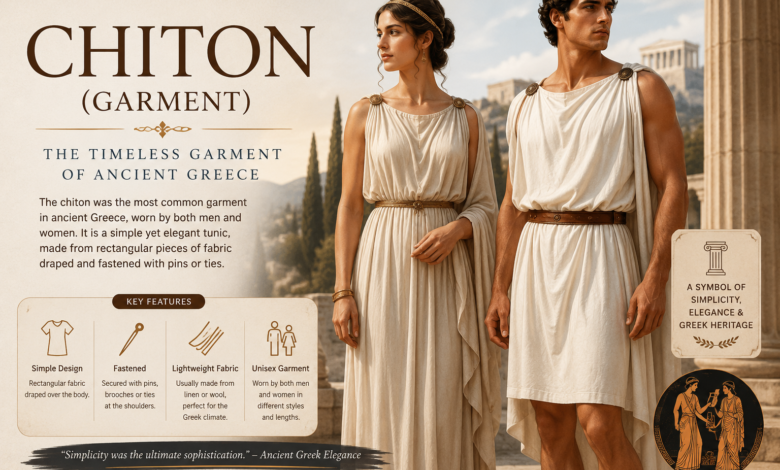
The chiton garment is one of the most recognizable pieces of clothing from ancient Greece. Although it originated thousands of years ago, its elegant design, practical construction, and cultural importance continue to inspire historians, fashion designers, and enthusiasts today. Made from a simple piece of fabric and secured with pins or belts, the chiton proved that sophisticated clothing does not always require complicated tailoring.
Throughout history, the chiton garment was worn by men, women, and children across different regions of Greece. It evolved over time to suit changing fashion trends, social customs, and practical needs. Whether crafted from lightweight linen for warm summers or luxurious wool for colder seasons, this garment reflected both functionality and personal style.
Today, studying the chiton garment offers valuable insight into ancient Greek civilization. It reveals how people dressed according to their status, occupation, and daily activities while highlighting the remarkable craftsmanship of early textile production. In this guide, we’ll explore everything you need to know about this iconic garment, from its history and construction to its influence on modern fashion.
What Is a Chiton (Garment)?
The chiton garment was a simple tunic created from a rectangular piece of cloth. Rather than being cut and sewn into complex shapes, the fabric was wrapped around the body and fastened at the shoulders using decorative pins called fibulae. A belt or sash often secured the garment around the waist, creating graceful folds that became one of its defining features.
One of the reasons the chiton garment became so popular was its versatility. It could be adjusted to fit different body types and worn in various lengths depending on the occasion. Shorter chitons allowed greater freedom of movement for workers and soldiers, while longer versions were common among women and individuals attending formal events.
Unlike many ancient garments that disappeared over time, the chiton garment has remained well documented through sculptures, pottery, paintings, and historical writings. These artistic representations provide historians with a clear understanding of how the garment looked and how it was worn throughout different periods of Greek history.
History of the Chiton (Garment)
The origins of the chiton garment date back to ancient Greece during the Archaic period. Influenced by clothing styles from neighboring civilizations, particularly the Ionians, the garment gradually became a staple of Greek fashion. Its simple yet elegant construction made it suitable for everyday life while still allowing room for decorative details.
As Greek society evolved, so did the chiton garment. During the Classical period, new weaving techniques and imported fabrics introduced greater variety in texture, color, and appearance. Wealthier citizens often wore finely woven linen or imported textiles, while ordinary people typically relied on locally produced wool.
The popularity of the chiton (garm.ent) extended beyond Greece. As Greek culture spread throughout the Mediterranean following the conquests of Alexander the Great, neighboring civilizations adopted elements of Greek clothing. Even the Romans incorporated similar garments into their wardrobes, demonstrating the lasting influence of this timeless design.
Types of Chiton (Garment)
The chiton (g.arment) existed in several forms, each designed for different purposes and lifestyles. The two most famous styles were the Doric chiton and the Ionic chiton, both reflecting regional preferences and cultural traditions.
The Doric chiton (garm.ent) was generally made from heavier wool and required fewer fasteners. It was practical, durable, and relatively simple to wear, making it ideal for everyday activities. Women frequently wore longer Doric chitons, while men often preferred shorter versions that allowed easier movement.
The Ionic chiton (garment) featured lighter linen fabric and multiple pins along the arms, creating flowing sleeves and a more elaborate appearance. This variation became especially popular among wealthier Greeks because it showcased fine craftsmanship and luxurious materials while maintaining the graceful silhouette associated with Greek fashion.
Materials Used to Make a Chiton (Garment)
The choice of fabric played an important role in determining the comfort and appearance of the chiton (garment). Linen remained one of the most popular materials because it was lightweight, breathable, and well suited to Greece’s warm climate. Its natural texture allowed air to circulate freely, making it comfortable even during hot summer months.
Wool was another widely used material for the chiton (garment), especially in cooler regions or during winter. Although heavier than linen, wool provided warmth and durability while remaining relatively easy to weave. Different grades of wool also allowed for varying levels of softness and quality.
Members of the upper class occasionally wore a chiton (garment) made from imported luxury fabrics or finely woven textiles decorated with colorful borders and intricate patterns. Such garments demonstrated wealth and social standing while emphasizing the owner’s appreciation for skilled craftsmanship.
How the Chiton (Garment) Was Worn
Wearing a chiton (garment) required surprisingly little effort despite its elegant appearance. The rectangular cloth was folded around the body and secured at the shoulders with decorative pins. A belt or cord tied around the waist created natural folds that added both comfort and visual appeal.
The length of the chiton (garment) varied depending on the wearer and the occasion. Soldiers, laborers, and athletes typically chose shorter versions that reached above the knees, allowing unrestricted movement during physical activities. Longer chitons extending to the ankles were more common among women and individuals participating in ceremonies.
Accessories often completed the appearance of the chiton (garment). Sandals, cloaks known as himations, jewelry, and decorative belts enhanced the overall outfit while reflecting personal taste and social position. These additions transformed a simple garment into an elegant ensemble suitable for various occasions.
Cultural Importance of the Chiton (Garment)
The chiton (garment) represented much more than everyday clothing. It reflected ancient Greek values such as balance, simplicity, and beauty. Artists frequently portrayed gods, philosophers, athletes, and political leaders wearing chitons, reinforcing the garment’s association with dignity and civilization.
Religious ceremonies also highlighted the significance of the chiton (garment). Priests, priestesses, and participants in festivals often wore specially prepared versions featuring clean white fabrics or decorative embroidery. Clothing became part of ritual expression, emphasizing purity and respect for the gods.
The chiton (garment) also provided clues about social identity. Fabric quality, color, decoration, and length could indicate wealth, occupation, or regional background. Although the basic design remained similar across society, subtle differences allowed individuals to express their place within Greek culture.
Influence of the Chiton (Garment) on Modern Fashion
The timeless elegance of the chiton (garment) continues to inspire designers around the world. Many modern dresses feature flowing silhouettes, draped fabrics, and belted waists that closely resemble ancient Greek clothing. Fashion houses frequently revisit these classical elements when creating evening gowns and bridal collections.
Costume designers for films, theater productions, and historical documentaries also rely heavily on the chiton (garment) to recreate authentic ancient settings. Its instantly recognizable appearance helps audiences connect with stories set in classical Greece while maintaining historical accuracy.
Beyond high fashion, the influence of the chiton (garment) appears in casual clothing as well. Loose tunics, wrap dresses, and minimalist designs all echo the same principles of comfort, elegance, and versatility that made the original garment so successful thousands of years ago.
Interesting Facts About the Chiton (Garment)
One fascinating aspect of the chiton (garment) is that it required very little sewing. Most versions relied on folding, pinning, and belting rather than permanent stitching, allowing wearers to adjust the garment easily whenever needed.
Ancient Greek artists carefully depicted the folds of the chiton (garment) in marble sculptures. These detailed carvings demonstrate an extraordinary understanding of fabric movement and remain some of the finest achievements in classical art history.
Although often associated exclusively with women, the chiton (garment) was widely worn by men as well. Philosophers, soldiers, athletes, and political leaders all adopted different versions suited to their daily responsibilities, highlighting the garment’s remarkable versatility.
Conclusion
The chiton (garment) stands as one of history’s most influential pieces of clothing. Its straightforward construction, graceful appearance, and practical design made it an essential part of ancient Greek life for centuries. More than just fabric wrapped around the body, it symbolized culture, craftsmanship, and the pursuit of beauty through simplicity.
Even today, the chiton (garment) continues to inspire fashion designers, historians, educators, and artists. Its legacy demonstrates how thoughtful design can remain relevant across thousands of years, influencing clothing styles far beyond its original time and place.
Whether you are studying ancient civilizations, exploring historical fashion, or simply curious about classical clothing, understanding the chiton (garment) provides a deeper appreciation for one of humanity’s most enduring garments. Its lasting appeal reminds us that timeless style often begins with elegant simplicity.
You May Also Read: Flapper Fashion