What Is a Digital Workplace Platform?
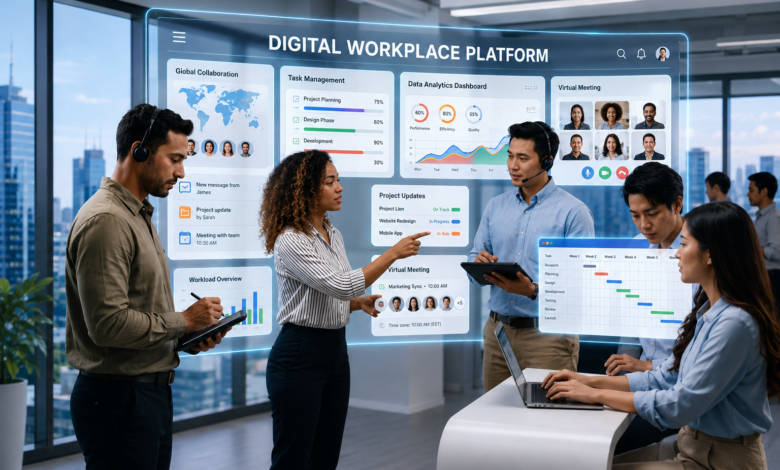
A digital workplace platform is the suite of digital solutions and services which enable employees to communicate, collaborate, access information, manage tasks, and do their work from within one integrated system. There is no need for an employee to switch from one app, website, email, and file to another when using such a platform in order to perform his or her day-to-day tasks.
As a concept, a digital workplace is quite easy to grasp: to make work more accessible and manageable via technology. The well-functioning platform will be capable of integrating all kinds of communication services, document management, project collaboration, employee portals, workflow management, and other business applications. It will allow creating a more integrated workplace for employees regardless of where they happen to be.
The importance of Digital workplace platform has grown due to hybrid and remote work models adopted by businesses. Today, employees expect to have access to necessary information and communicate with colleagues even not being present at the office physically.
Table of Contents
- What Is a Digital Workplace Platform?
- Why Digital Workplace Platforms Matter
- Key Features of a Digital Workplace Platform
- Benefits of Using a Digital Workplace Platform
- How a Digital Workplace Platform Improves Collaboration
- Digital Workplace Platforms and Remote Work
- How to Choose the Right Digital Workplace Platform
- Common Challenges of Digital Workplace Platforms
- Digital Workplace Platform vs Traditional Workplace Tools
- The Future of Digital Workplace Platforms
- Frequently Asked Questions
- Final Thoughts
Why Digital Workplace Platforms Matter
Modern workplaces can become complicated very quickly. An employee might use one application for messaging, another for video meetings, a separate system for documents, and yet another tool for project management. When these systems do not work well together, employees can waste valuable time searching for information or switching between platforms.
A digital workplace platform can reduce this problem by connecting important workplace functions in one ecosystem. Instead of asking, “Where is that file?” or “Which application contains this information?”, employees have a clearer place to start. This can make everyday work feel more organized and less frustrating.
There is also a communication advantage. When information is spread across emails, private messages, shared drives, and different applications, important updates can easily get missed. A centralized digital workplace gives organizations better ways to share announcements, documents, knowledge, and conversations with the right people.
Key Features of a Digital Workplace Platform
Communication and Messaging
The ability to communicate is among the most vital aspects of any digital workplace environment. In the course of their day-to-day activities, staff members may require various communication tools, such as instant messaging, group discussion, video meetings, announcements, and others, in order to stay in contact.
As an alternative to using emails, team members can communicate with one another via other means which would allow them to exchange information faster. This point is especially relevant for distributed teams, since the team members would not be able to drop by and ask a question at the desk of their fellow employee.
It is also crucial that such a communication tool should allow the staff members to organize their conversations.
Document and Knowledge Management
Businesses create an enormous amount of information every day. From reports and presentations to policies, training materials, and project documents, employees need reliable access to information.
A digital workplace platform can provide centralized document storage and knowledge management. Employees can search for information rather than repeatedly asking coworkers where something is located.
Knowledge management is particularly valuable for larger organizations. When useful knowledge is stored in a searchable and organized environment, employees can solve problems more independently and new team members can learn company processes more easily.
Task and Project Management
Many of the digital workplace solutions also provide tools for task and project management. They will allow employees to track tasks that need to be completed, the employee responsible for a task, and when it is required to be completed.
The tools used in project management might include the ability to create task lists, use calendars, set deadlines, send notifications, track progress and even automate the workflow. These tools will help teams stay informed about their responsibilities without having to deal with lengthy email exchanges.
Once project information is integrated into communication and documents, employees can save time on finding necessary context. The task could be attached to the appropriate discussion, document or project information.
Benefits of Using a Digital Workplace Platform
Some of the major advantages include increased efficiency. Workers may waste considerable amounts of time completing repetitive administrative tasks, looking up information, or shifting between non-related programs. By consolidating the tools, it is possible to streamline these activities.
Another advantage is increased collaboration. It will be possible to interact and collaborate on various projects irrespective of whether or not one is physically in the office. It will be possible for firms to develop teams that are competent regardless of their physical location.
It is also easier to enhance the experience of workers by organizing the digital environment. Confusion with the technology may irritate employees. The organized digital environment offers people a convenient way to access resources, contact co-workers, and perform regular activities.
How a Digital Workplace Platform Improves Collaboration
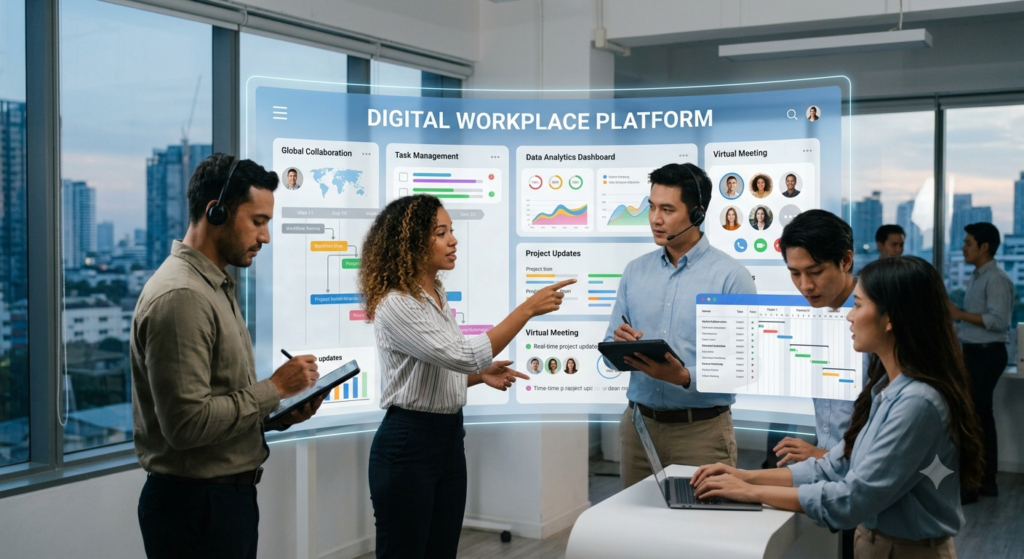
Collaboration does not need individuals to sit together at the same table anymore. Employees can be located in different cities, countries, departments or even time zones. A digital workspace will provide such teams with a common environment in which to keep collaborating.
For instance, a marketing team can create a common workspace with all the necessary information about the campaign, deadlines, discussions and assignments. There will be no need for searching through separate emails, and the information will be available in one place.
Such approach may also increase transparency. With the information about projects being accessible for all the right employees, it becomes easier for everyone to see what other people are doing. The managers will find out about any delays, while team members will know where their part of work fits into the whole project.
Digital Workplace Platforms and Remote Work
Remote work has changed what employees expect from workplace technology. When employees are working outside a traditional office, digital tools become their primary connection to coworkers and company resources.
A digital workplace platform can provide a virtual environment where employees can communicate, access files, participate in meetings, manage tasks, and find company information. This helps create a sense of continuity between office-based and remote employees.
However, technology alone does not guarantee successful remote work. Organizations still need clear communication practices, reasonable workloads, effective management, and strong security policies. The platform should support these practices rather than attempt to replace them.
How to Choose the Right Digital Workplace Platform
When selecting a workplace digital platform, the quantity of its features is just one of many factors to consider. It is imperative that businesses determine the needs of their employees first. Having hundreds of features will not help if it is hard for employees to use the platform.
Ease of use is vital when choosing a platform. Employees should not have problems in figuring out how to work with basic functions without having to learn complex technical skills. Good design, efficient search options, and good organization of information make a great deal of difference.
Security is another critical issue. The workplace platform will often include some confidential documents, employee information, business plans, information about customers and much more. It is necessary to take into account the authentication options, access control, encryption, administration, compliance, and security policies.
One should consider integration as well. The majority of organizations use accounting platforms, CRM software, calendars, storage services, and other programs. It is good to choose a platform which will integrate with these systems.
Common Challenges of Digital Workplace Platforms
Despite all the benefits of using digital workplace platforms, there could be certain problems in the implementation process. For example, there is a possibility that employees would resist changes since those people are already used to some tools.
The solution of this problem could be proper training and communication. People should be shown that using the platform will benefit them by simplifying tasks. Some training and examples could be helpful here.
Information overload is the other challenge which might arise because of improper usage of the platform. It could happen when every department of the organization will create numerous channels, groups, folders, notifications, and documents, thus making everything confusing.
Security is the other challenge related to the increased level of digital connectivity and possible human errors when setting up access permissions. Therefore, the businesses should constantly monitor access and educate their staff about security.
Digital Workplace Platform vs Traditional Workplace Tools
Typically, technologies at the traditional workplace consist of several separate pieces of software. For example, an employee has one piece of software for emails, another for storing files, a third for communicating, a fourth for HR services, and so on.
The purpose of a digital workplace platform is to unite most of these functionalities. This is not necessarily to replace all applications with a single tool but to provide an integrated digital environment that allows for interaction between different services.
The difference is crucial since companies do not have to necessarily replace everything they use with something new. The optimal digital workplace strategy would be to integrate the existing applications within a unified employee experience.
The Future of Digital Workplace Platforms
The future of digital workplace technology is going to be one of increased automation and improved information management. Artificial intelligence will make it easier for employees to locate and organize information, automate processes, and locate the right materials.
Personalization will also be crucial in the future. Different departments do not require the same kind of information every single day. The future platforms will have more personalized dashboards, alerts, suggestions, and workflows depending on what the job of the individual entails.
It is important to remember that despite the advances, the human connection is still key. Technology will make it easier to collaborate and connect, but the best digital workplaces will include both good technology and communication.
Frequently Asked Questions
What is a digital workplace platform?
Digital Workplace Platform is a digital networked environment which enables employees to interact, collaborate, retrieve information, perform tasks and get work done through the use of online services.
What are the main benefits of a digital workplace platform?
Some of the key advantages include better collaboration, information retrieval, higher productivity, better communication, streamlined workflows, among others.
Is a digital workplace platform only for remote companies?
NO. Workplace tools for digital workplaces can help office workers, hybrid workers, and remote workers. Workers who operate in the same physical location can also take advantage of centralized communications, information sharing, documentation, and workflow.
What should businesses look for in a digital workplace platform?
In addition to the features mentioned, businesses must look at usability, security, integration, search functionality, collaboration, scalability, mobile support, administration, and employee requirements.
Can a digital workplace platform improve productivity?
YES. Employees will be able to do meaningful work with more efficiency through minimizing switching between tools, providing access to information, making collaboration easier, and automating tasks.
Final Thoughts
Unlike any other workplace application, a Digital workplace platform can be considered a hub of communication, collaboration, information search, task management, and connection with the organization.
The most effective platforms are not always those which offer the greatest number of features. The most effective platforms are those that solve real-world workplace issues without complicating everyday activities. Employees need a technology that is understandable, reliable, secure, and beneficial.
In light of ongoing development of remote/hybrid work, the role of the digital workplace technology will become more and more prominent in the modern business process. Organizations, considering such aspects as usability, integration, security, and needs of the employees, can build a digital workplace environment.
You May Also Read: Timewarp TaskUs