Having a tooth removed usually means a few days of soreness, swelling, and discomfort. But if the pain starts getting worse instead of better, you may wonder whether something is wrong. One possible reason is a condition called dry socket, also known medically as alveolar osteitis.
Dry socket can develop after a tooth extraction when the blood clot that normally protects the extraction site does not form properly, breaks down too soon, or becomes dislodged before the area has healed. Without that protective clot, the underlying area can become exposed and painful.
The good news is that dry socket can usually be treated by a dentist. Knowing the common dry socket symptoms can help you recognize the problem early and get appropriate dental care rather than trying to manage severe pain on your own.
Table of Contents
- What Is Dry Socket?
- What Causes Dry Socket?
- Common Dry Socket Symptoms
- When Do Dry Socket Symptoms Start?
- Dry Socket vs. Normal Tooth Extraction Pain
- Who Is More Likely to Develop Dry Socket?
- How Dentists Diagnose Dry Socket
- How Dry Socket Is Treated
- What You Can Do While Waiting to See a Dentist
- How to Prevent Dry Socket
- When Should You Contact a Dentist?
- Frequently Asked Questions
- Final Thoughts
What Is Dry Socket?
Dry socket is a painful complication that can occur after a tooth is removed. After an extraction, your body normally creates a blood clot inside the empty tooth socket. This clot acts as a natural protective layer over the underlying bone and nerve endings while the area begins healing.
When the blood clot fails to develop or disappears too early, the socket may become exposed. This can lead to significant pain and delayed healing. Dry socket is particularly associated with wisdom tooth extractions, although it can occur after other tooth removals as well.
One important thing to understand is that dry socket is not simply the same as ordinary post-extraction soreness. Some discomfort after a tooth is removed is expected, but dry socket often causes pain that becomes stronger or returns after initially improving.
What Causes Dry Socket?
The exact reason dry socket develops is not always clear. However, it is connected to the early loss or breakdown of the blood clot that should protect the extraction site. Once that protection is lost, the area can become irritated and extremely uncomfortable.
Certain factors can increase the risk. Smoking and tobacco use are recognized risk factors because they can interfere with healing and increase the likelihood of the blood clot being disturbed. This is one reason dentists strongly advise avoiding smoking after an extraction.
A difficult extraction, particularly the removal of an impacted wisdom tooth, may also increase the risk. Previous history of dry socket can be another risk factor. Still, dry socket can sometimes occur even when someone follows all aftercare instructions carefully.
Common Dry Socket Symptoms
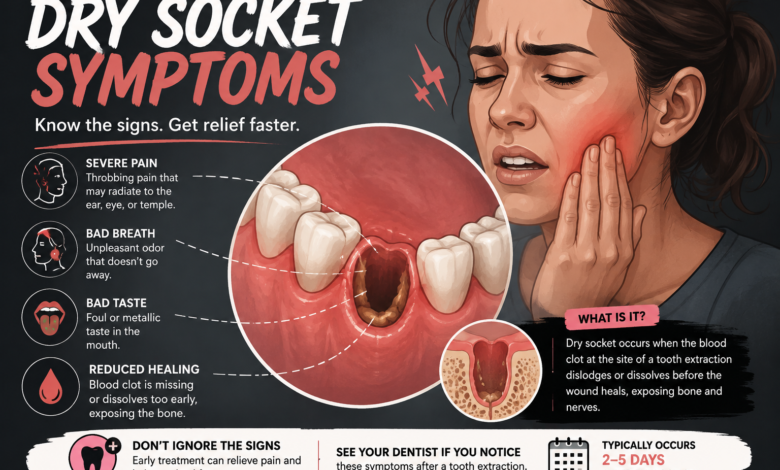
The most noticeable symptom is usually strong, persistent pain that develops or becomes worse a few days after the extraction. Instead of gradually settling down, the pain may become throbbing and difficult to ignore. Mayo Clinic notes that dry socket pain commonly begins within about one to three days after tooth removal.
Another classic symptom is pain that spreads away from the extraction site. You may feel discomfort extending toward the ear, temple, eye, neck, or another part of the face on the same side. This spreading pain can make Dry Socket Symptoms socket feel different from ordinary healing discomfort.
Bad breath and an unpleasant taste in the mouth are also common signs. Some people may notice that the extraction socket looks unusually empty or that the normal blood clot is no longer visible. In some cases, exposed bone may be visible in the socket.
When Do Dry Socket Symptoms Start?
Timing is one of the useful clues when looking at Dry Socket Symptoms socket symptoms. Normal discomfort is common shortly after an extraction and may be most noticeable during the first few days before gradually improving.
Dry socket, on the other hand, often becomes noticeable several days after the tooth has been removed. Different medical sources describe slightly different time ranges, but pain that becomes significantly worse between roughly two and five days after extraction is a common warning pattern.
This does not mean every person with pain on day three has Dry Socket Symptoms socket. Healing varies from person to person. The important point is the direction of the symptoms: pain that is becoming worse instead of steadily improving deserves attention from your dentist.
Dry Socket vs. Normal Tooth Extraction Pain
Some pain after a tooth extraction is completely normal. Your gum and surrounding tissues have been through a procedure, so soreness, swelling, and jaw discomfort can occur during the healing process. These symptoms generally become easier to manage as the days pass.
Dry Socket Symptoms socket tends to follow a different pattern. The pain may be intense, throbbing, persistent, and may spread toward the ear or side of the face. Bad breath or a bad taste can also appear, particularly when the extraction site is no longer protected by a healthy clot.
| Normal healing | Possible dry socket |
| Pain gradually improves | Pain becomes worse or returns |
| Mild to moderate soreness may occur | Strong, persistent or throbbing pain |
| Swelling can occur after extraction | Pain may spread toward the ear or face |
| Symptoms generally settle with time | Bad taste or bad breath may develop |
| Extraction site continues healing | Socket may appear empty |
This table is only a general guide. A dentist is the right person to determine whether your symptoms are caused by Dry Socket Symptoms socket, normal healing, infection, or another dental problem.
Who Is More Likely to Develop Dry Socket?
Dry Socket Symptoms socket can happen to anyone after an extraction, but some situations are associated with a higher risk. Wisdom tooth removal, especially difficult lower wisdom tooth extractions, is commonly associated with the condition.
Smoking or using tobacco after an extraction can increase the risk because tobacco can interfere with healing. For this reason, dental aftercare instructions commonly recommend avoiding smoking after tooth removal.
The complexity of the extraction can matter as well. A difficult or traumatic extraction may make the area more vulnerable to healing complications. A previous history of Dry Socket Symptoms socket may also increase the chance of experiencing it again.
How Dentists Diagnose Dry Socket
A dentist usually diagnoses Dry Socket Symptoms socket by asking about your symptoms and examining the extraction site. The timing and character of the pain can provide important clues, especially if the pain has become significantly worse after initially improving.
During the examination, the dentist may look for signs such as an empty-looking socket or exposed bone. They may also check for other problems that can cause pain after an extraction, including infection or another complication.
If you have severe or increasing pain after a tooth extraction, it is better to have the area checked rather than assuming it is normal. A professional examination can help identify the actual cause and determine the appropriate treatment.
How Dry Socket Is Treated
Treatment focuses mainly on reducing pain and helping the extraction site remain clean while it heals. A dentist may gently clean or irrigate the socket to remove trapped food particles or debris. In some cases, a medicated or soothing dressing may be placed over the area.
A dental dressing can provide relief while the socket continues its natural healing process. Depending on the symptoms, the dentist may recommend follow-up care or additional dressing changes.
Antibiotics are not automatically required for every case of Dry Socket Symptoms socket because dry socket itself is not necessarily the same thing as a bacterial infection. A dentist or other healthcare professional should decide whether antibiotics are appropriate based on the person’s symptoms and overall situation.
What You Can Do While Waiting to See a Dentist
If you suspect Dry Socket Symptoms socket, the safest step is to contact the dentist who performed the extraction or another dental professional. Severe or worsening pain after an extraction should not simply be ignored.
Follow the aftercare instructions you were given. Keep the mouth clean without aggressively disturbing the extraction site. Dental professionals may recommend gentle rinsing after the initial period following extraction, depending on your specific procedure and instructions.
Avoid touching, picking, or repeatedly checking the socket with your fingers or tongue. The area needs time to heal, and unnecessary disturbance can interfere with recovery. Your dentist can tell you exactly what care is appropriate for your particular extraction.
How to Prevent Dry Socket
The most useful prevention step is to protect the blood clot during the early healing period. Follow your dentist’s instructions carefully, particularly during the first day after the extraction. Avoid actions that could disturb the extraction site.
Smoking is an important factor to avoid after an extraction because it can increase the risk of Dry Socket Symptoms socket and interfere with healing. Your dentist may provide specific instructions about how long you should avoid smoking or other tobacco products.
It is also helpful to choose foods and drinks that are appropriate for your stage of healing. Dental aftercare guidance commonly recommends softer foods initially and avoiding foods that can easily become trapped around the extraction wound.
When Should You Contact a Dentist?
Contact your dentist if your pain becomes severe, gets worse instead of better, or returns several days after your extraction. Pain accompanied by a bad taste or bad breath can also be a reason to have the socket checked.
You should seek urgent dental advice if you have severe or worsening pain and swelling that is not responding to the recommended pain relief. A high temperature, feeling generally unwell, or other signs of infection also need professional assessment because they may point to a different problem.
Heavy bleeding that does not stop also requires prompt dental or medical attention. Do not wait several days hoping serious symptoms will disappear on their own. Getting the extraction site examined is the safest way to understand what is happening.
Frequently Asked Questions
What is the most common dry socket symptom?
The most common symptom is significant, persistent pain that develops or becomes worse a few days after a tooth extraction. The pain can sometimes radiate toward the ear, temple, eye, or neck on the same side.
Does dry socket always cause bad breath?
No. Bad breath and an unpleasant taste are common symptoms, but not everyone will experience every symptom. Severe or increasing pain remains one of the most important warning signs.
Can you see a dry socket?
Sometimes the extraction site may look empty, and exposed bone may be visible. However, you should not try to inspect or touch the socket repeatedly. A dentist can examine it safely and determine whether Dry Socket Symptoms socket is present.
How long after tooth extraction can dry socket happen?
Dry Socket Symptoms socket commonly becomes noticeable within the first several days after extraction. Mayo Clinic reports that pain often begins one to three days after tooth removal, while other dental guidance describes symptoms developing around two to five days afterward.
Is dry socket an infection?
Dry Socket Symptoms socket is a delayed-healing condition caused by the loss or breakdown of the protective blood clot. It is not automatically the same as an infection, so antibiotics are not necessarily needed in every case. A dentist should assess the symptoms and decide what treatment is appropriate.
Final Thoughts
Understanding dry socket symptoms can make the days after a tooth extraction a little less confusing. Some soreness is expected after dental surgery, but pain that becomes severe, starts getting worse after a few days, or spreads toward the ear or side of the face deserves attention.
Bad breath, an unpleasant taste, and an extraction site that appears empty can provide additional clues. However, symptoms can overlap with other dental problems, so it is not a good idea to diagnose yourself based on one sign alone.
If you think you may have Dry Socket Symptoms socket, contact your dentist or oral surgeon. Treatment is available, and professional care can help control the pain while the extraction site continues to heal. Most importantly, follow your dentist’s aftercare instructions and avoid disturbing the healing area.
You May Also Read; Conjoined Triangles of Success