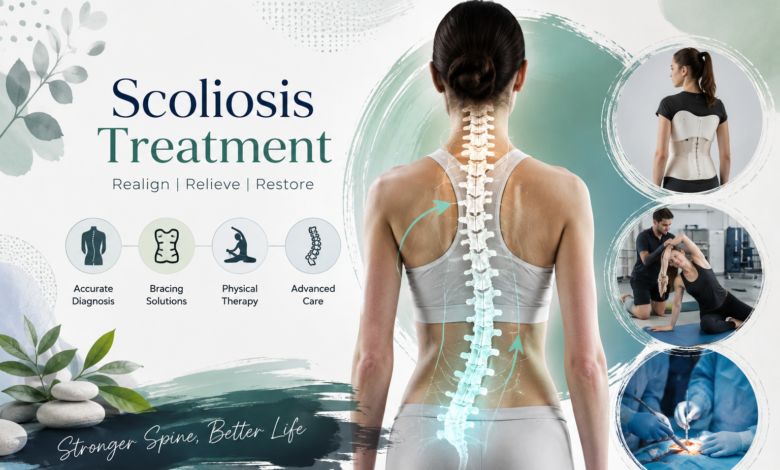
Scoliosis treatment is not a one-size-fits-all process. Some people with a curved spine may only need regular checkups, while others may benefit from a brace, physical therapy, pain management, or surgery. The right approach depends on several factors, including the person’s age, the size and location of the spinal curve, whether the spine is still growing, and whether the curve is getting worse.
For many people, hearing the word “scoliosis” can immediately raise concerns about surgery or long-term problems. The good news is that many cases are mild and do not require major treatment. Doctors usually monitor mild curves carefully and only recommend more active treatment when there is a significant risk of progression or when symptoms and functional problems develop.
In this guide, we’ll explain the most common scoliosis treatment options, how treatment differs between children and adults, what role exercise can play, and when surgery may become necessary. The goal is to make this topic easier to understand without making unrealistic promises about “straightening” the spine.
Table of Contents
- What Is Scoliosis?
- What Causes Scoliosis?
- How Is Scoliosis Diagnosed?
- What Determines Scoliosis Treatment?
- Observation and Regular Monitoring
- Scoliosis Bracing
- Physical Therapy and Exercise
- Pain Management for Scoliosis
- Scoliosis Treatment for Adults
- Scoliosis Surgery
- Recovery After Scoliosis Surgery
- Can Scoliosis Be Cured Without Surgery?
- Lifestyle Tips for Living With Scoliosis
- When Should You See a Doctor?
- Frequently Asked Questions
- Final Thoughts
What Is Scoliosis?
Scoliosis is a condition in which the spine develops a sideways curve and may also rotate. Instead of appearing relatively straight when viewed from behind, the spine may form a shape resembling a “C” or “S.” A spinal curve of more than 10 degrees on an X-ray is generally considered scoliosis.
Scoliosis can develop at different ages. However, adolescent idiopathic scoliosis is particularly common and often becomes noticeable during the rapid growth years around puberty. Signs can include uneven shoulders, one shoulder blade appearing more prominent, an uneven waist, or leaning to one side.
Having scoliosis does not automatically mean that someone will experience severe pain or need surgery. In fact, many people with scoliosis live normal, active lives. Treatment is mainly focused on preventing significant progression when necessary, managing symptoms, and maintaining good function and quality of life.
What Causes Scoliosis?
The most common form is called idiopathic scoliosis, which means doctors cannot identify one specific cause. It is especially common in adolescents. Researchers believe that several factors may contribute to its development, but simply having poor posture is not considered a straightforward explanation for idiopathic scoliosis.
Other types of scoliosis have identifiable causes. Congenital scoliosis develops because of abnormalities in the formation of the vertebrae, while neuromuscular scoliosis can occur in association with conditions that affect the muscles or nervous system. Early-onset scoliosis refers to scoliosis that develops before the age of 10.
Adults can also develop or continue to have scoliosis. In some cases, an existing curve becomes more noticeable over time, while degenerative changes in the spine can contribute to adult spinal deformity. Because different types of scoliosis behave differently, identifying the underlying cause is an important part of choosing treatment.
How Is Scoliosis Diagnosed?
Diagnosis usually begins with a physical examination. A healthcare professional may look at the person’s shoulders, shoulder blades, waist, hips, and overall posture. They may also ask the person to bend forward because this can make spinal rotation and unevenness easier to see.
If Scoliosis Treatment is suspected, an X-ray is commonly used to evaluate the spine. Standing X-rays can show the curve and allow a specialist to measure its size in degrees. This measurement is important because treatment decisions often depend partly on the severity of the curve and whether it is changing over time.
Diagnosis is more than simply finding a curve. Doctors also consider age, growth remaining, symptoms, curve location, and the likelihood that the curve will progress. This is why two people with similar-looking curves may receive different treatment recommendations.
What Determines Scoliosis Treatment?
One of the biggest factors is age. A curve in a young person who is still growing can behave differently from a curve in someone who has reached skeletal maturity. Growing children and teenagers may need closer monitoring because some curves can progress during growth.
Curve size is another important consideration. Smaller curves are often monitored, while moderate curves in growing children may lead doctors to consider bracing. Larger or progressive curves may require consultation with a spinal specialist about surgical options. The exact thresholds can vary depending on the individual situation and the specialist’s assessment.
Doctors also consider symptoms and function. A person with little or no discomfort may require a very different plan from someone experiencing persistent pain, nerve-related symptoms, breathing difficulties, or significant limitations caused by a severe spinal deformity.
Observation and Regular Monitoring
Observation is one of the most common approaches for mild Scoliosis Treatment. It does not mean that the condition is being ignored. Instead, the doctor regularly checks the spine to see whether the curve remains stable or becomes larger.
For growing children with mild curves, follow-up appointments may include physical examinations and periodic X-rays. The timing depends on the child’s age, growth stage, curve characteristics, and specialist recommendations. Some curves remain mild and never require a brace or surgery.
Monitoring can also be appropriate for adults whose Scoliosis Treatment is stable and not causing significant problems. If symptoms develop or the curve appears to change, the treatment plan can be reassessed. This gradual approach helps avoid unnecessary treatment while still catching meaningful progression early.
Scoliosis Bracing
Bracing is mainly used for selected children and teenagers who are still growing and have a curve that is large enough to carry a meaningful risk of progression. The purpose of a brace is generally to help prevent the curve from getting worse while the child continues to grow, rather than permanently straightening the spine.
A brace is usually custom-fitted to the person’s body. Depending on the type prescribed, it may need to be worn for much of the day. Following the specialist’s instructions is important because the effectiveness of bracing is related to appropriate use and the child’s stage of growth.
Wearing a brace can take some adjustment, especially for teenagers. It may affect clothing choices, comfort, sports, and confidence. A supportive medical team can help with practical issues and make sure the brace fits properly. Importantly, a brace should be prescribed and monitored by a qualified healthcare professional rather than purchased and used without medical assessment.
Physical Therapy and Exercise
Exercise is an important part of staying generally healthy when someone has scoliosis. Many people with scoliosis can participate in normal physical activities and sports unless their healthcare professional recommends specific restrictions.
Physical therapy may be recommended for particular goals, such as improving strength, movement, posture, flexibility, or managing back discomfort. Some Scoliosis Treatment-specific exercise programs have been developed to address spinal asymmetry, but evidence about their ability to stop curve progression is still limited compared with established treatments such as appropriate bracing.
It is also important not to assume that every exercise advertised online can correct scoliosis. Exercises may help with strength, fitness, and symptoms, but they should not be presented as a guaranteed way to straighten a structural spinal curve. A physiotherapist familiar with Scoliosis Treatment can create a program based on the person’s specific needs.
Pain Management for Scoliosis
Pain is not experienced by everyone with Scoliosis Treatment, particularly among adolescents. When pain does occur, it is important to determine whether scoliosis is actually responsible because back pain can have many different causes. Persistent or unusual pain should be evaluated by a healthcare professional rather than automatically blamed on the spinal curve.
For adults with Scoliosis Treatment, pain management may become a more important part of treatment. Depending on the cause and severity of symptoms, clinicians may consider physical therapy, appropriate pain-relief medicines, or other treatments such as injections. Medication choices should be discussed with a doctor or pharmacist, particularly for young people or anyone with other health conditions.
A useful treatment plan looks beyond temporary pain relief. Improving strength, mobility, sleep habits, daily movement, and overall physical function may help someone manage symptoms more effectively. The exact combination should be based on the individual’s diagnosis rather than a generic online routine.
Scoliosis Treatment for Adults
Adult Scoliosis Treatment treatment often focuses on symptoms and maintaining function. If an adult has a relatively stable curve and no significant symptoms, treatment may not be necessary beyond observation. When pain or other problems are present, conservative treatments are usually considered first.
Physical therapy can be useful for improving movement and strengthening muscles that support the body. Some adults may also receive medication or injections for pain when appropriate. These treatments generally aim to manage symptoms rather than permanently remove the structural curve.
Surgery may be considered in selected adults with severe or progressive deformity, significant pain, neurological problems, or major limitations in daily life. The decision is complex because spinal surgery has meaningful risks and requires a careful assessment of the expected benefits. A specialist should explain the available options and alternatives before surgery is considered.
Scoliosis Surgery
Surgery is generally reserved for more significant cases. In adolescents, spinal fusion is commonly considered for severe curves or curves that are likely to continue progressing. The Scoliosis Treatment Research Society notes that surgery is usually considered around curves of 45 to 50 degrees or more, although individual circumstances can change the recommendation.
The main goals of Scoliosis Treatment surgery are to reduce the spinal deformity to a safer and more balanced position and prevent the curve from continuing to progress. Spinal fusion involves joining selected vertebrae together, often using implants and rods to hold the spine in the desired position while the bones heal and fuse.
Surgery is a major decision, not a quick fix. The potential benefits need to be weighed against risks such as infection, bleeding, problems with the hardware or fusion, and, rarely, nerve complications. Patients and families should have a detailed discussion with their surgical team about expected results, recovery, and individual risks before making a decision.
Recovery After Scoliosis Surgery
Recovery after Scoliosis Treatment surgery varies from person to person. The healthcare team usually provides instructions about movement, school or work, physical activity, wound care, and follow-up appointments. It can take time for the body to heal, so gradually returning to normal activities is generally more appropriate than rushing the process.
Follow-up visits are important because doctors need to monitor healing and the condition of the spinal fusion. The exact schedule depends on the type of operation, the patient’s age, and other individual factors.
Emotional recovery matters too. A major operation can be stressful, especially for teenagers who may already feel self-conscious about wearing a brace or having a visible spinal curve. Having support from parents, guardians, friends, teachers, and healthcare professionals can make the recovery period easier.
Can Scoliosis Be Cured Without Surgery?
This is one of the most common questions about Scoliosis Treatment. For a structural spinal curve, there is no simple exercise, stretch, supplement, or home remedy that can reliably straighten the spine. The AAOS notes that surgery is the treatment that can reduce the curvature, although surgery does not usually make the spine completely straight.
That does not mean nonsurgical treatment is useless. Observation can help doctors identify progression, bracing can reduce the risk of worsening in appropriate growing patients, and physical therapy can support strength, movement, and symptom management. These treatments have different goals, so it is important to understand what each one is designed to accomplish.
Be cautious with claims that promise a permanent cure through a single exercise, special diet, supplement, chiropractic technique, or device. Some approaches may help with comfort or general function, but they should not replace evidence-based medical care when Scoliosis Treatmentrequires monitoring or treatment.
Lifestyle Tips for Living With Scoliosis
Living with scoliosis does not mean giving up an active lifestyle. Most people with scoliosis can participate in everyday activities and exercise, although individual restrictions may apply depending on the severity and type of Scoliosis Treatment and whether someone has recently had surgery.
Maintaining general fitness can be helpful. Activities that build strength and cardiovascular fitness may support overall health, while a physiotherapist can help identify exercises that are suitable for a particular person’s symptoms and abilities.
Mental and emotional well-being should not be overlooked. Uneven shoulders, a spinal brace, or the possibility of surgery can affect confidence, especially during adolescence. Having honest conversations with healthcare professionals and trusted people can help reduce anxiety and make treatment feel more manageable.
When Should You See a Doctor?
You should speak with a healthcare professional if you notice signs such as uneven shoulders, an obvious spinal curve, one shoulder blade appearing more prominent, an uneven waist, or leaning noticeably to one side. These signs do not necessarily prove that someone has Scoliosis Treatment, but they are worth checking.
Persistent back pain should also be evaluated rather than automatically attributed to Scoliosis Treatment. This is especially important when pain is severe, persistent, or accompanied by other concerning symptoms.
If Scoliosis Treatment has already been diagnosed, follow the recommended monitoring schedule. A curve that changes during growth may require a different treatment approach, so keeping scheduled appointments can make a significant difference in identifying progression at the right time.
Frequently Asked Questions
What is the best treatment for scoliosis?
There is no single best treatment for everyone. Mild curves may only need observation, while growing children with moderate progressive curves may benefit from bracing. Severe or progressive curves may require surgical assessment. Treatment should be based on age, curve size, growth stage, symptoms, and the underlying cause.
Can exercise straighten scoliosis?
Exercise can help with general fitness, muscle strength, movement, and sometimes pain management, but it should not be considered a guaranteed way to straighten a structural spinal curve. Scoliosis Treatment-specific exercises are still being studied, and they should not automatically replace recommended medical treatment.
Does scoliosis always require surgery?
No. Most people with Scoliosis Treatment do not need surgery. Many cases are managed with observation, and some growing children may use bracing to reduce the risk of progression. Surgery is generally reserved for more severe or progressive cases and selected adults with significant symptoms or deformity.
Can scoliosis get worse with age?
It depends on the person’s age, curve size, and whether they are still growing. Some curves remain stable, while larger curves can progress, particularly during growth. In adults, certain larger curves can also gradually worsen over time. Regular medical assessment helps determine what is happening with an individual curve.
Can someone with scoliosis live a normal life?
Yes. Many people with Scoliosis Treatment are able to live active, normal lives and participate in exercise and sports. The condition varies greatly from person to person, so activities and treatment should be adjusted when necessary based on professional medical advice.
Final Thoughts
Scoliosis Treatment treatment is best understood as a personalized process rather than a single procedure. Some people need nothing more than periodic monitoring, while others may need bracing, physical therapy, pain management, or surgery. The right treatment depends on how large the curve is, whether it is changing, the person’s age and growth stage, and whether the condition is causing symptoms.
One of the most important things to remember is that having Scoliosis Treatment does not automatically mean that your life will be limited. Many people remain active and healthy with appropriate monitoring and treatment. Early evaluation can also help doctors identify curves that need closer attention before they become more difficult to manage.
If you or your child has signs of scoliosis, the safest next step is to speak with a qualified healthcare professional. Avoid relying on online “quick fixes” or exercises that promise to permanently cure Scoliosis Treatment. A proper diagnosis and individualized treatment plan provide a much stronger foundation for long-term spinal health.
Medical note: This article is intended for general education and should not replace an examination, diagnosis, or personalized treatment plan from a qualified healthcare professional.
You May Also Read; Pancreatitis Treatments